
Following their participation in the 2026 Metropolis International Conference, members of the Remitting for Resilience (R2) project gathered in Accra, Ghana, for three days of project workshop from November 20–22, 2026. The workshop brought together research partners from Africa, Europe, and North America to review research findings, discuss fieldwork plans, and prepare for the next stages of the project.
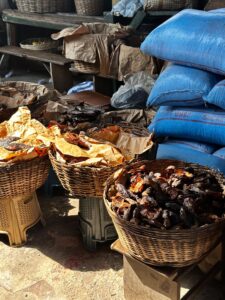
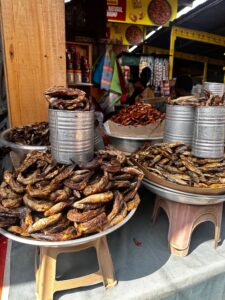
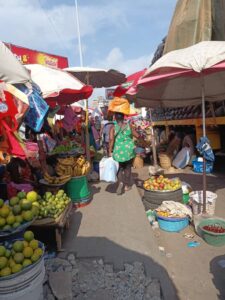
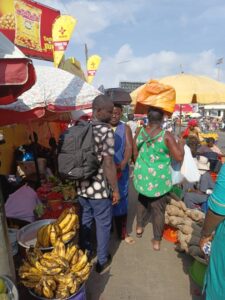
The meetings began on November 20 with a learning journey through Accra, during which participants visited some of the city’s largest local food markets. The visits offered an opportunity to observe the city’s vibrant food markets and local trading activities.
On November 21, the team convened for a full-day workshop focusing on research progress and plans. Chaired by Prof. Kavita Datta, the morning session featured presentations of selected Workstream 1 (WS1) research findings on internal migration from Ghana, Namibia, Kenya, and Zimbabwe. These were followed by presentations of WS2 research implementation plans covering eight sets of migration corridors across Africa and beyond.
In the afternoon, participants worked in breakout groups to review the draft WS2 research instruments, including household surveys and qualitative interview guides. The group discussions, facilitated by Dr. Zhenzhong Si, examined the instruments’ suitability for different research contexts and identified revisions needed before fieldwork implementation.
The workshop continued on November 22 with a focus on Workstream 3 (WS3). Research teams presented their plans for the next phase of the project and discussed an adapted Community-Based Resilience Analysis (CoBRA) methodology. This participatory approach will build on WS2 research findings to examine how migrant remittances contribute to household and community resilience to climate change and identify locally appropriate strategies for strengthening adaptation and food security.
Further breakout discussions addressed methodological considerations, practical challenges, and implementation arrangements for WS3. The meetings concluded with a discussion of research priorities and next steps for the project in 2027.
Download the Workshop Programme.