

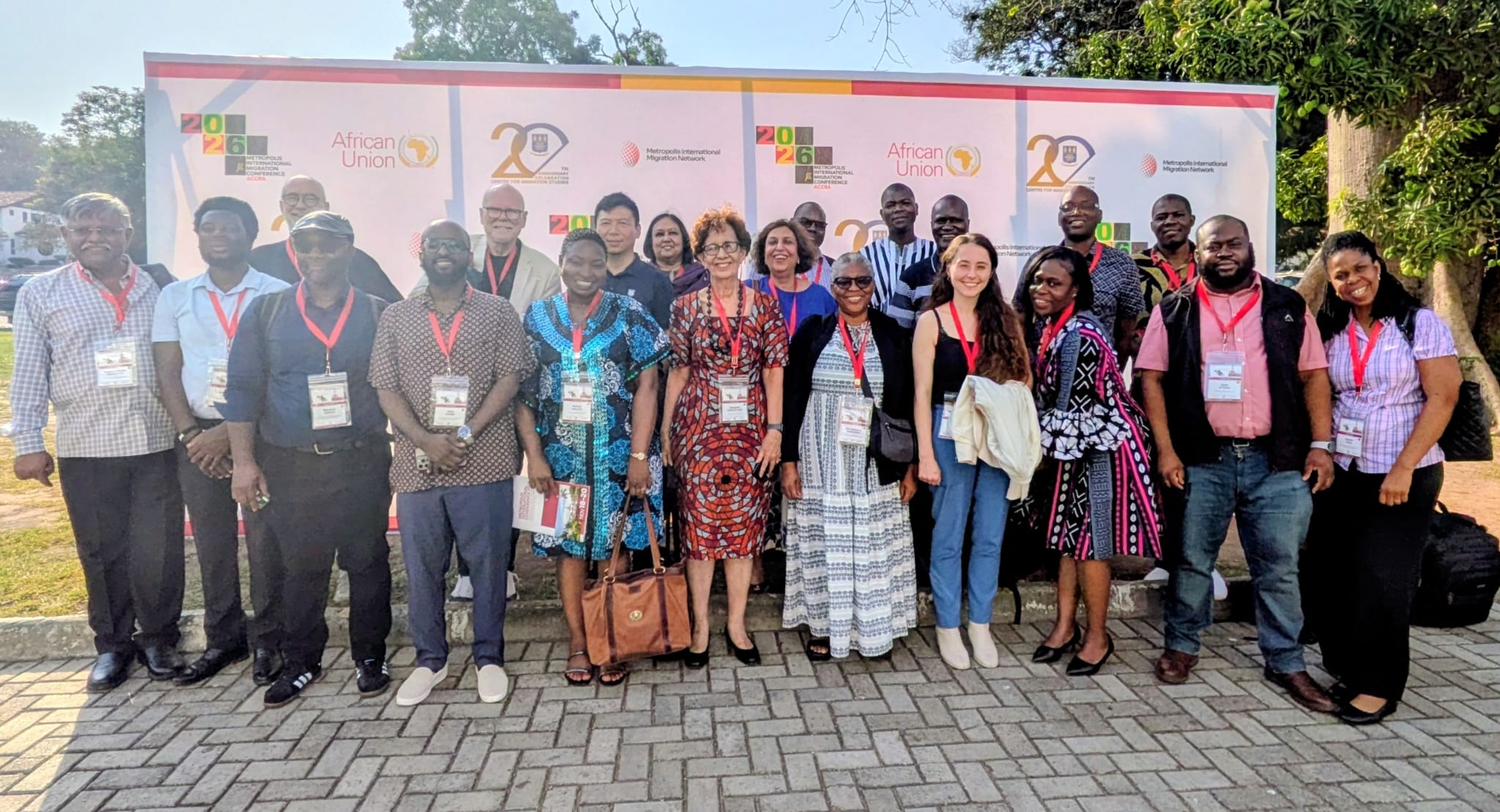
Members of the Remitting for Resilience (R2) project participated in the 2026 Metropolis International Conference, held from November 18–20 at the University of Ghana in Accra. The conference, held in Africa for the first time, brought researchers, policymakers, and practitioners from around the world to discuss the theme “Rethinking African Mobility: Past Lessons, Present Realities, Future Possibilities.”
The R2 team organized two panel sessions on November 19, featuring eight research papers examining migration, remittances, food security, and climate adaptation across different African migration corridors.
The morning panel, “Remitting for Resilience: Climate Change, Food Insecurity, and Household Survival,” was chaired by Dr. Sujata Ramachandran. Researchers presented findings from the South Africa–Ethiopia, Mozambique–South Africa, Somalia–Kenya, and Angola–Namibia migration corridors, examining migrants’ remitting practices and the role of remittances in supporting household food security and responses to climate-related challenges. Presenters included postdoc Perfect Mazani, Dr. Godfrey Tawodzera, Dr. Zack Ahmed, and Prof. Lawrence Kazembe.
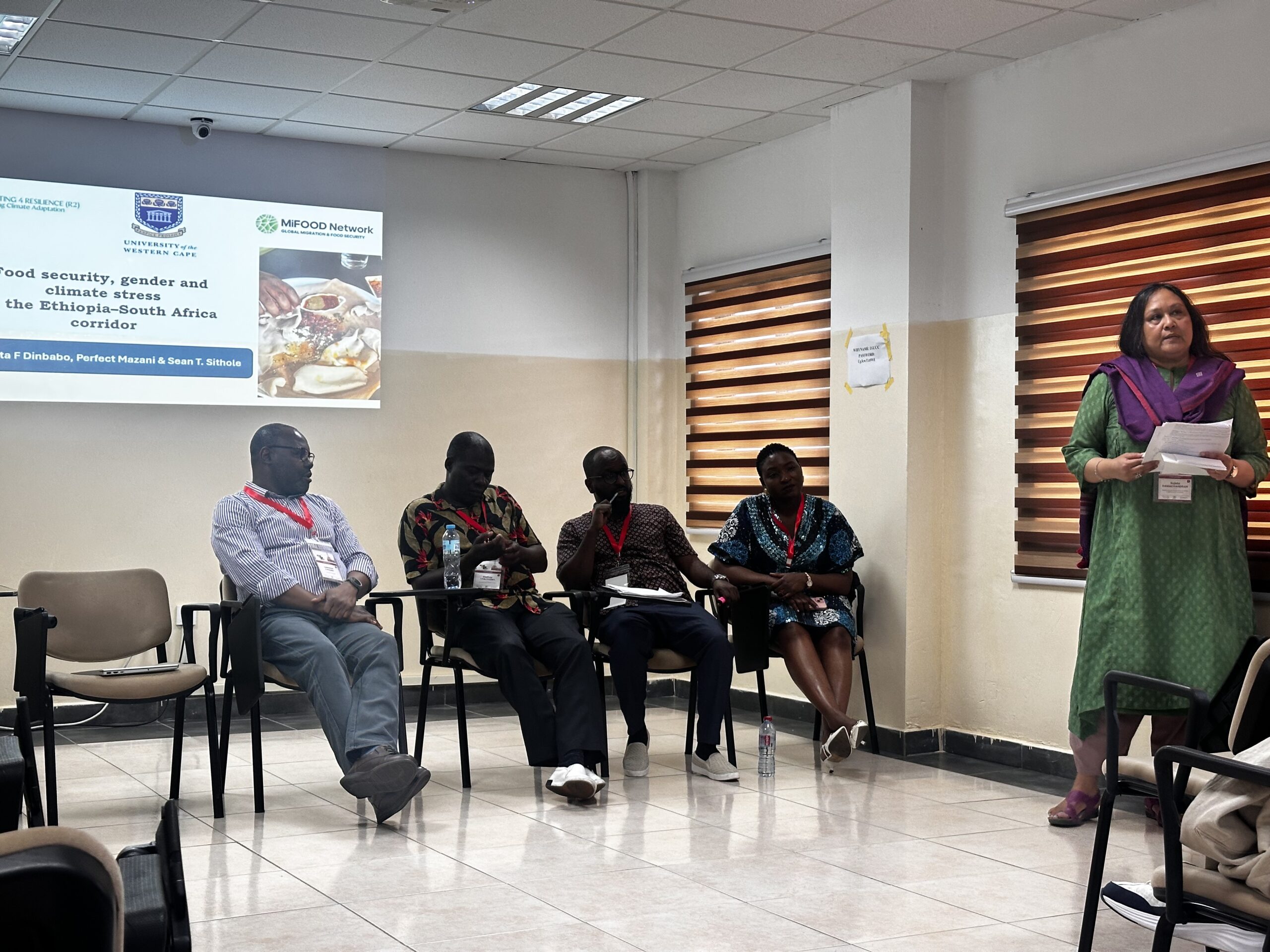
In the afternoon, Prof. Jonathan Crush chaired a second panel, “Remitting for Resilience: Digital Infrastructures, Governance, and Climate Adaptation.” Presentations by Prof. Kavita Datta, Dr. Abel Chikanda, Dr. Naomi Sunu, Dr. Eunice Annan-Aggrey, and Dr. Bernard Owusu examined remittance practices and financial infrastructures along the Zimbabwe–UK, Zimbabwe–Canada, Ghana–Canada, and Ghana–Qatar corridors. The papers explored how remittance systems, digital technologies, and governance arrangements shape migrants’ ability to support households facing climate-related challenges.
The presentations highlighted the geographical diversity of the R2 project’s research and brought new perspectives on the potential and limitations of remittances as resources for climate resilience. The conference also offered an opportunity for R2 researchers and partners to exchange ideas with the wider international migration research community.
Download the Conference Panels information HERE.