

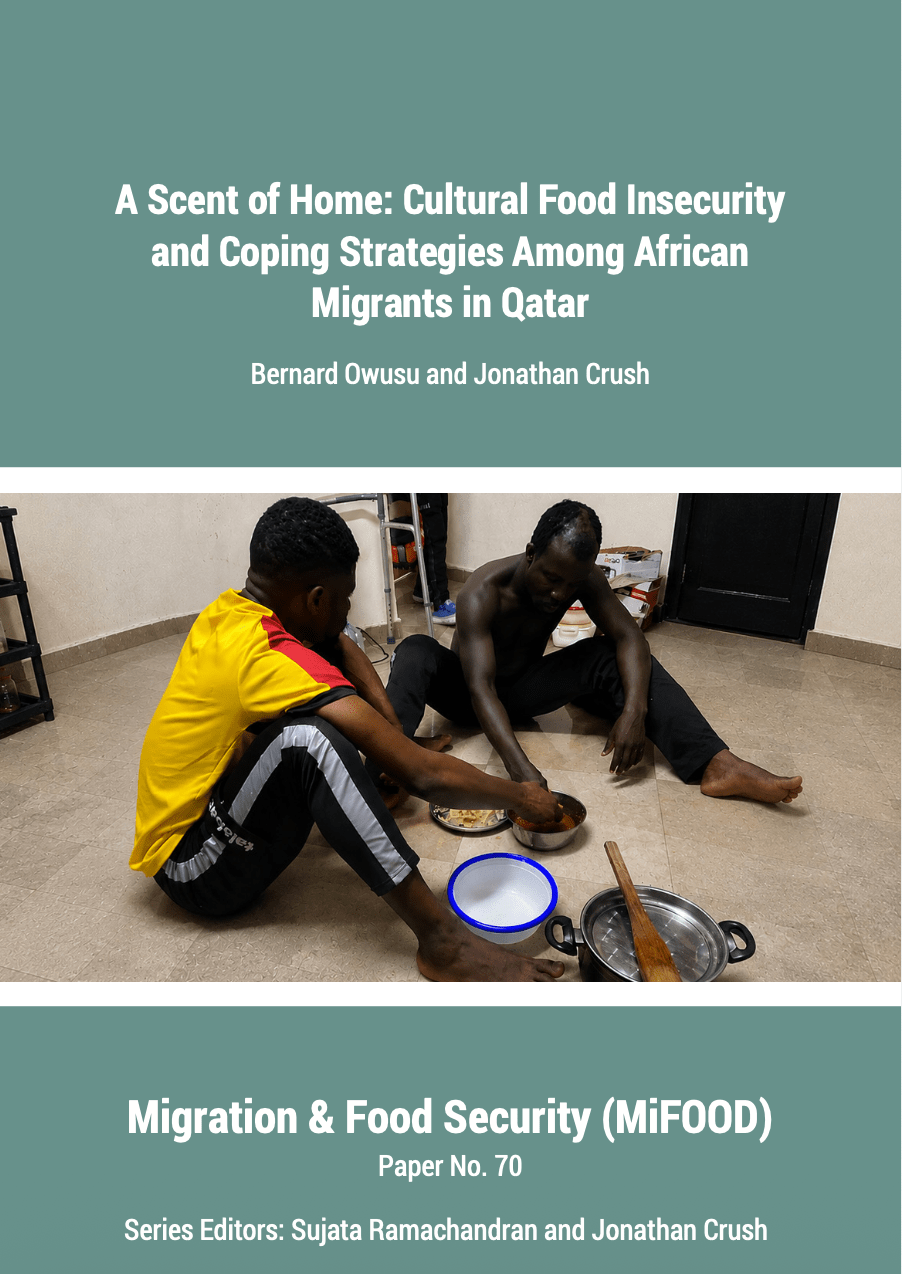
Conventional food security frameworks define food security primarily in terms of food availability, access, utilisation, and stability. Widely used measures such as the FAO’s Food Insecurity Experience Scale (FIES) emphasise physical and economic access to sufficient food while largely overlooking its cultural dimensions. This paper argues that such approaches are inadequate for understanding the food security experiences of migrant populations whose wellbeing is closely tied to culturally meaningful foods, preparation practices, and shared eating behaviours. Drawing on qualitative research with 58 Ghanaian migrants in Qatar and 50 returned migrants in Ghana, the paper explores the concept of cultural food security within the Ghana-Qatar migration corridor. The paper argues that many migrants would be classified as food secure according to conventional indicators because they have access to sufficient food through employer-provided meals or food allowances. However, they simultaneously experience profound cultural food insecurity arising from culinary estrangement, limited access to culturally appropriate foods, restrictions on food preparation, and the inability to exercise choice over what, how, and with whom they eat. Migrants respond through adaptive strategies including clandestine cooking, ingredient substitution, purchasing imported Ghanaian foods, patronising Ghanaian restaurants and food vendors, sharing meals, and relying on transnational food remittances and community networks. These practices help sustain cultural identity and a sense of home but remain constrained by labour camp regulations, the kafala employment system, low wages, high food costs, insecure legal status, and responsibility to send remittances to family in Ghana. We conclude food security assessment must move beyond caloric sufficiency to recognise cultural access as an essential dimension of food security. Incorporating cultural food security into migration research and policy offers a more comprehensive understanding of migrant wellbeing and highlights the need for food security frameworks that acknowledge identity, dignity, agency, and belonging alongside material access to food.
August 20, 2026
MiFOOD Paper No. 70
Featured City: Accra, Ghana