

Ghana

A Scent of Home: Cultural Food Insecurity and Coping Strategies Among African Migrants in Qatar
Conventional food security frameworks define food security primarily in terms of food availability, access, utilisation, and stability. Widely used measures such as the FAO’s Food Insecurity Experience Scale (FIES) emphasise physical and economic access to sufficient food while largely overlooking its cultural dimensions. This paper argues that such approaches are inadequate for understanding the food

Labour Migration, Cash Remittances, and Household Food Security in the Ghana-Qatar Corridor
While the relationship between migration and development has been extensively studied, the connection between migration and food security remains underexplored, particularly in the South-South context. This paper examines the linkages between international migration, cash remittances, and household food security in the Ghana–Qatar migration corridor. Quantitative methods, including multinomial regression analysis, were used to assess household
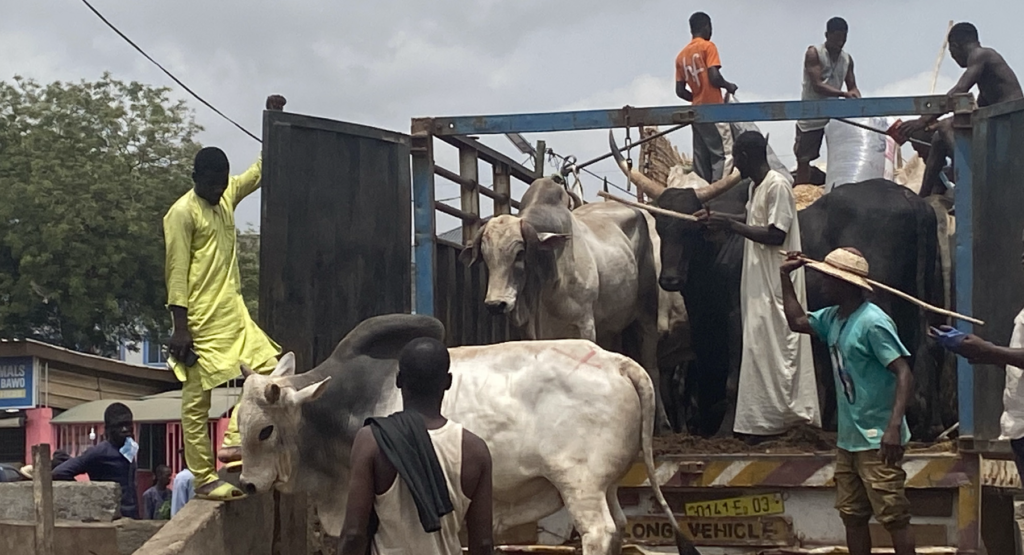
Migration and Meatification: Ghana’s Urban Protein Economy
Africa is experiencing a rapid urban transformation that is fundamentally reconfiguring urban food environments, value chains, and consumption behaviour. At the heart of this shift is the meatification of urban diets, characterized by increased consumption of animal-source proteins. This paper examines the dynamics of Ghana’s urban protein economy, focusing on the critical yet invisible role
Migration and Meatification: Ghana’s Urban Protein Economy Read More »

Emergency Statecraft, Lockdown Vulnerability, and Food Insecurity Among Migrant Workers in Qatar During COVID-19
This report has shone a spotlight on the plight of a group of Ghanaian migrant workers stranded in Qatar before, during, and after the COVID-19 pandemic in 2020 and 2021. As the first study of its kind in Qatar, this report breaks new ground by investigating the impact of COVID-19 on the food security of
Migrant Remittances, Food Security, and Translocal Households in the Ghana-Qatar Migration Corridor
This paper examines the impact of migrant remittances on household food security in the Ghana-Qatar migration corridor. Drawing on a 2023 survey of migrant-sending households in Ghana and in-depth qualitative interviews with migrants in Qatar, the study explores the characteristics, determinants, and patterns of remitting. The findings reveal that cash remittances play a crucial role

The Migration-Remittance Dividend: Building Food Security Across the Commonwealth
Migration and remittance processes have a significant impact on socioeconomic development and food security in Commonwealth countries. Although remittances are critical sources of income for migrant-sending households in countries of origin, their effects are shaped by economic arrangements, financial inclusion and policy contexts. Moreover, the linkages between migration, remittances and food security remain largely underexplored.
The Migration-Remittance Dividend: Building Food Security Across the Commonwealth Read More »