

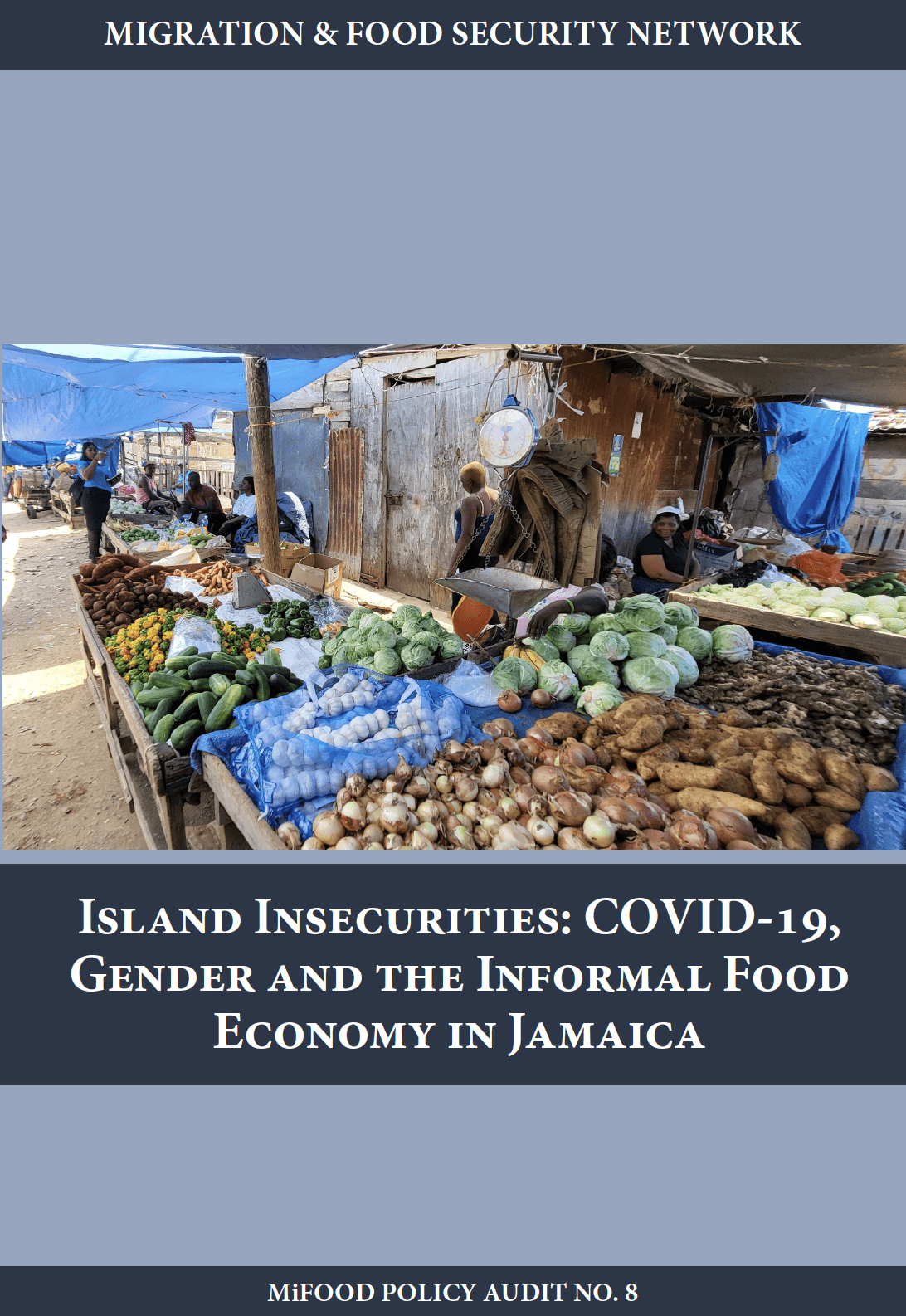
Jamaica’s heavy reliance on imported food exacerbated the challenges of the COVID-19 pandemic, leaving communities vulnerable to price spikes and shortages when external markets were disrupted. The pandemic exposed deep-seated vulnerabilities in Jamaica’s informal urban food sector and catalysed an urgent call for integrated policy reforms. Economic fallout was unevenly distributed, with informal workers, especially women, experiencing profound disruptions. This policy audit situates Jamaica’s COVID-19 response within a broader policy audit framework by examining epidemiological trends, economic repercussions, gendered impacts, food security impacts and resilience in the informal sector. It also offers actionable insights for policymakers while emphasising the need for adaptive strategies that balance public health imperatives with socioeconomic recovery. The recommendations emphasise that enhancing social protection measures through comprehensive financial support programmes is crucial for sustaining livelihoods during economic shocks and that a cohesive policy framework is essential for long-term recovery. A comprehensive strategy that strengthens local food production, modernises market infrastructure, and expands social safety nets while addressing gender disparities can significantly enhance the resilience of Jamaica’s informal urban food sector.
October 8, 2026
MiFOOD Policy Audit No. 8
Featured City: Kingston, Jamaica