
The MiFOOD Network, in partnership with the University of Nairobi (UON), convened leading scholars, policymakers, and practitioners in Nairobi for a two-day conference titled “Gendered Entrepreneurship & the Urban Informal Food Ecosystem: Findings from the MiFOOD Women Feeding Cities Project.”
The conference that took place on February 9-11 brought together researchers from Africa, Latin America and Canada to share findings from the Women Feeding Cities (WFC) project and to reflect on the role of women in shaping urban informal food systems in the context of pandemic and post-pandemic recovery.
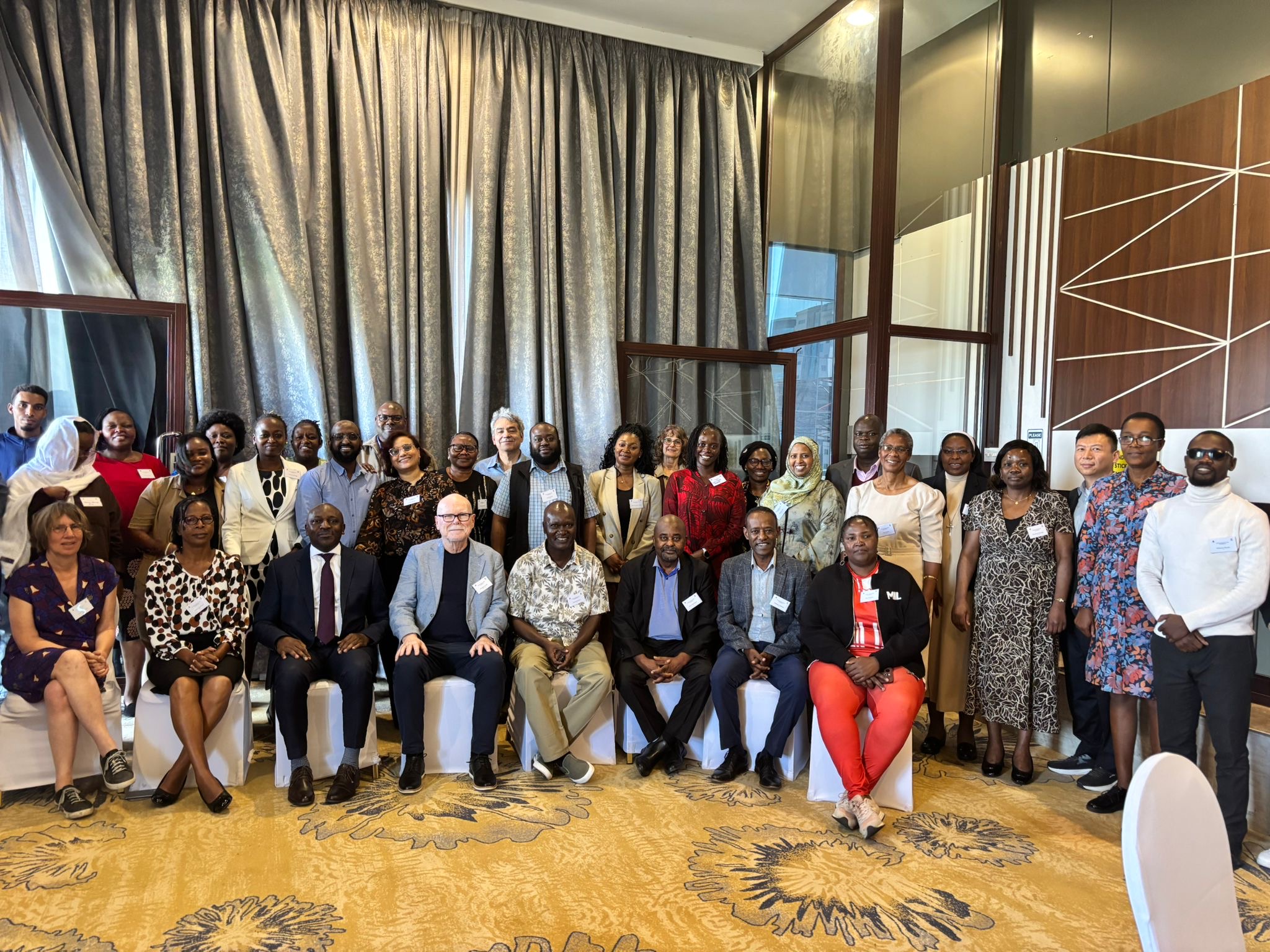
The conference opened with welcome remarks from Prof Samuel Owuor (Coordinator, MiFOOD Projects, UON), Prof Jonathan Crush (Director, MiFOOD Network, BSIA & UWC), Prof Stellah Mukhovi (Chairperson, Department of Geography, Population & Environmental Studies, UON), Prof Jack Odhiambo (Dean, Faculty of Arts and Social Sciences, UON), and Dr Sabelo Mbokazi (Head: Labour, Employment and Migration, African Union) .
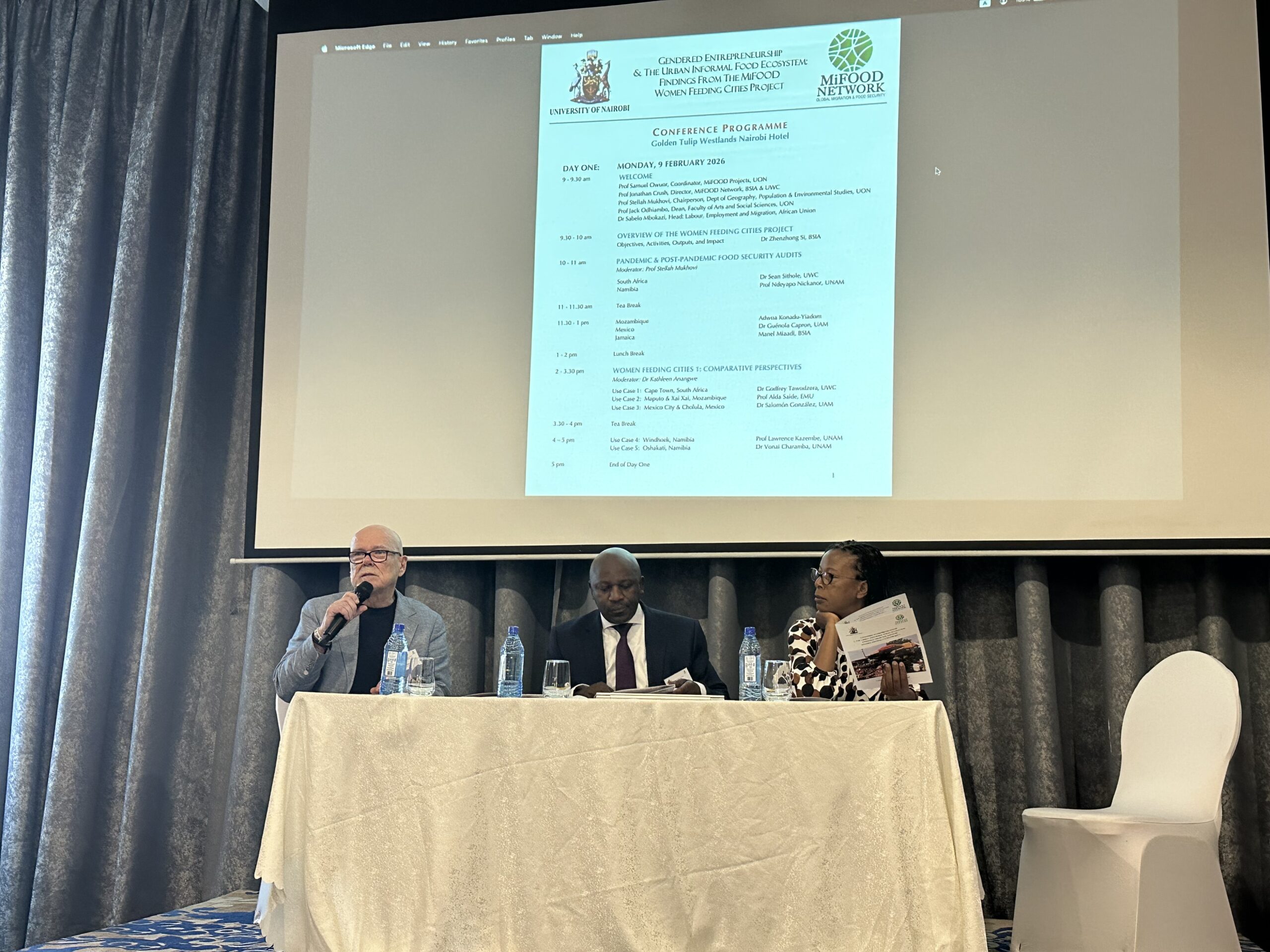
Dr Zhenzhong Si (BSIA) provided an overview of the project, outlining its objectives, activities, outputs, and anticipated impacts. His presentation highlighted the project’s comparative, multi-country approach to understanding how women entrepreneurs sustain urban food security through informal food economies.
Pandemic and Post-Pandemic Food Security Audits
The first day featured country-level findings from pandemic and post-pandemic food security audits. Presentations examined experiences in South Africa (Dr Sean Sithole, UWC) and Namibia (Prof Ndeyapo Nickanor, UNAM), followed by additional country studies from Mozambique (Adwoa Konadu-Yiadom), Mexico (Dr Guénola Capron, UAM), and Jamaica (Manel Miaadi, BSIA).
These presentations highlighted the disproportionate burdens borne by women in informal food sectors during COVID-19 and demonstrated how gendered entrepreneurship remained central to household and community food access during periods of economic disruption.
Comparative Perspectives from WFC
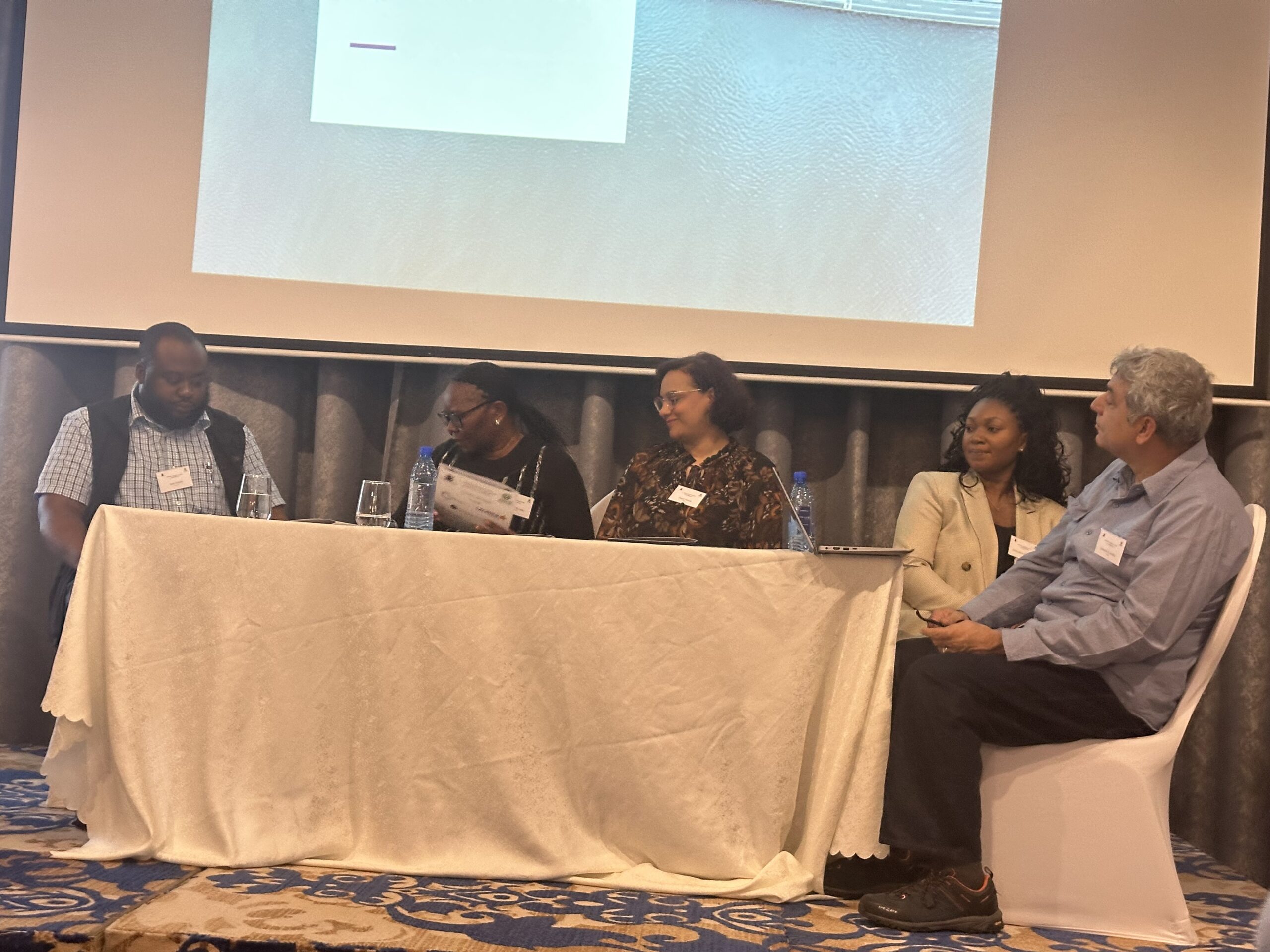
In the afternoon of Day 1, a comparative session moderated by Dr Kathleen Anangwe explored case studies from Cape Town (Dr Godfrey Tawodzera, UWC), Maputo and Xai Xai (Prof Alda Saide, EMU), Mexico City and Cholula (Dr Salomón González, UAM), as well as Windhoek (Prof Lawrence Kazembe, UNAM) and Oshakati (Dr Vonai Charamba, UNAM) .
These use cases highlighted both shared challenges and context-specific dynamics shaping informal food ecosystems, including regulatory constraints, migration, gender norms, and access to infrastructure.
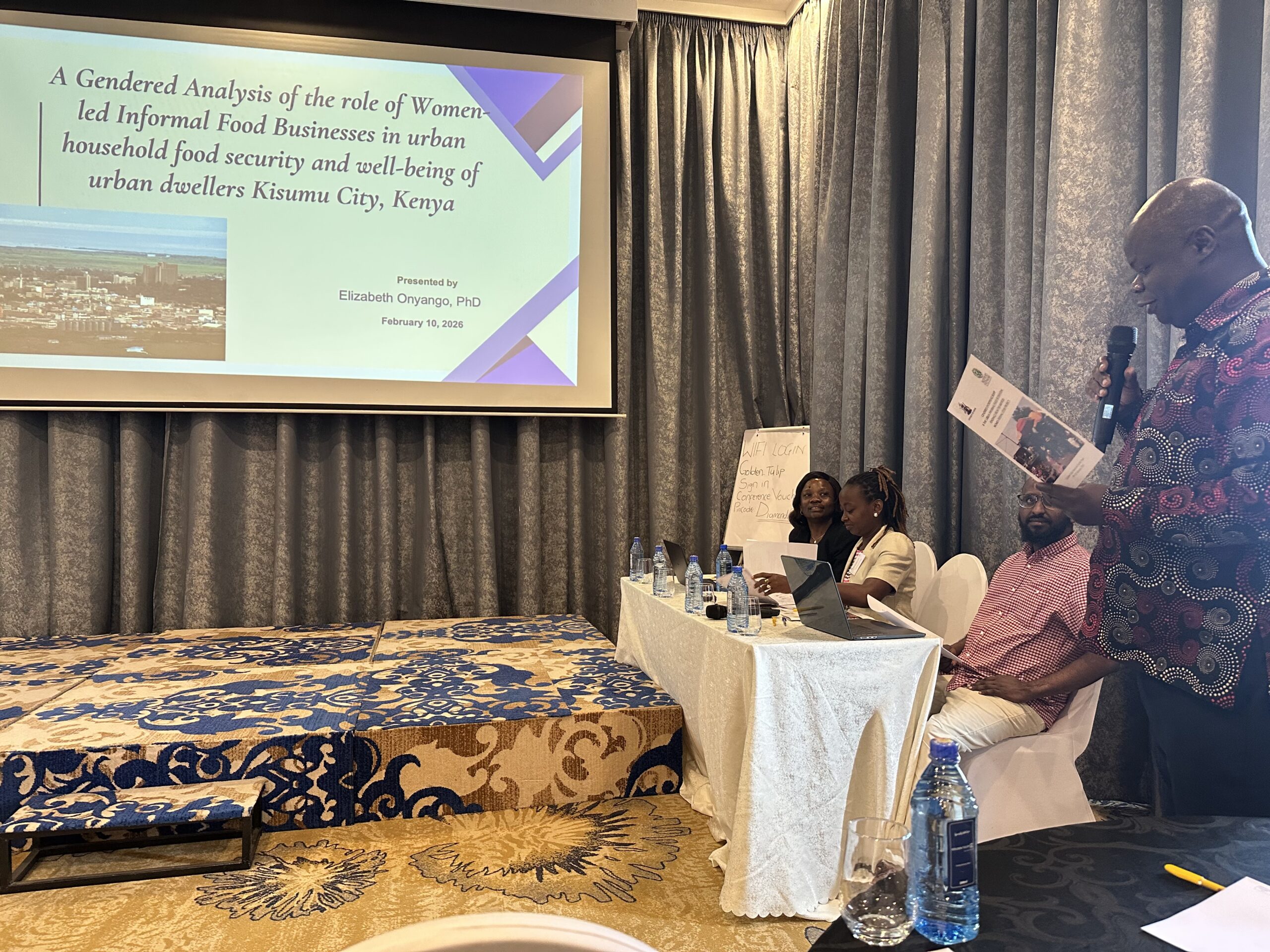
Day 2 turned the spotlight to Kenya, with presentations on Kisumu (Dr Elizabeth Onyango, UAlberta), Nairobi’s informal settlements (Dr Veronica Mwangi, UON), and Eastleigh (Dr Zack Ahmed, BSIA). These case studies provided grounded insights into the everyday realities of women food vendors and entrepreneurs in Kenyan cities.
Policy Round Table
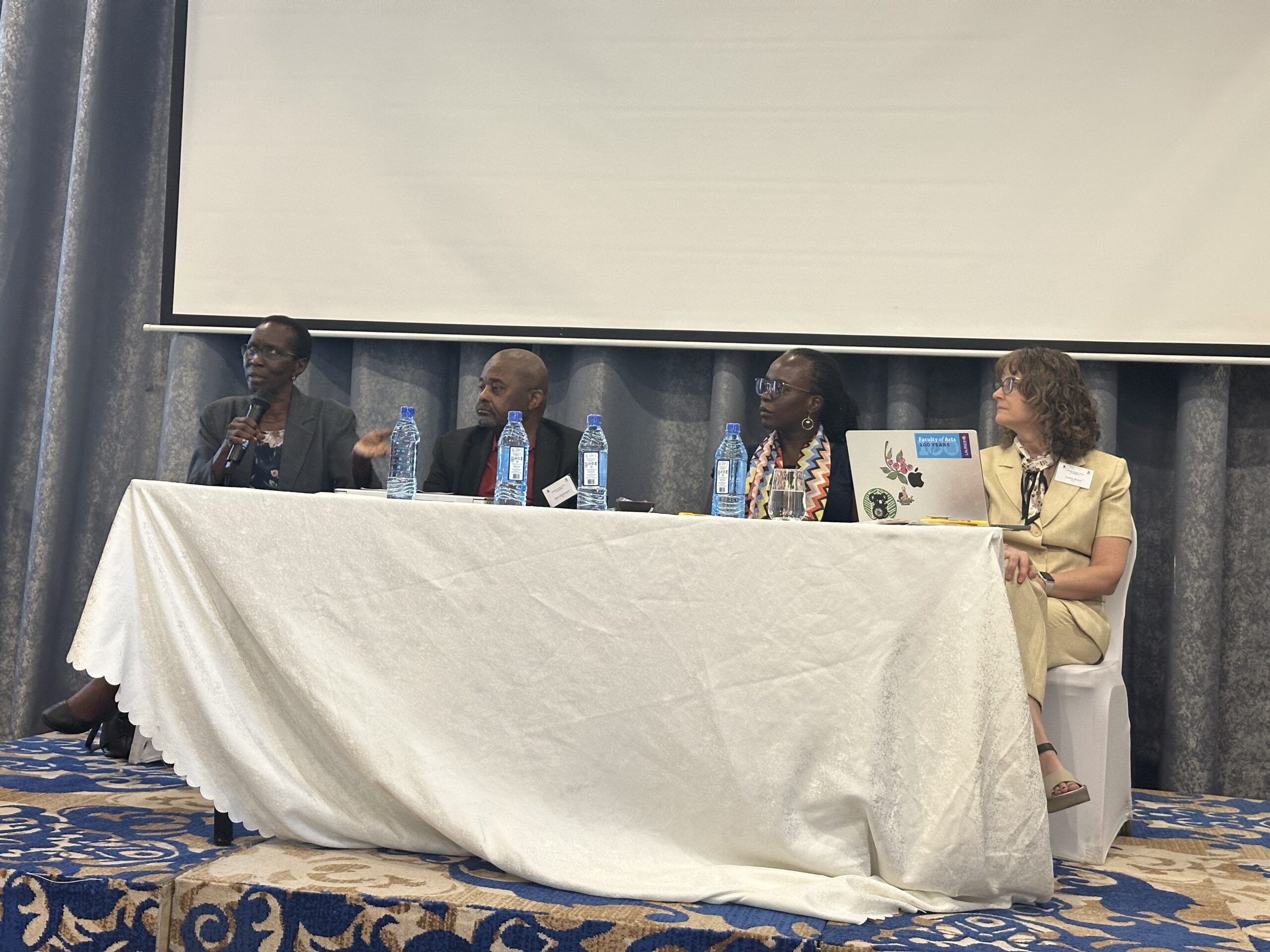
A high-level Policy Round Table, moderated by Prof Fatuma Ali, brought together Dr Alex Awiti (IDRC Board), Prof Winnie Mitullah (IDS, UON), Amina Mohammed (Nairobi City County), Dr Andrea Brown (WLU), and Peter Mudungwe (African Union). The discussion focused on translating research findings into actionable policy, strengthening support for informal food traders, and aligning urban governance with food security and gender equity goals.
The conference concluded with reflections on future directions for the MiFOOD Network, including “Informality & AI (WFC 2.0)” presented by Prof Mulugeta Dinbabo (UWC) and “Remitting for Resilience (R2)” presented by Prof Samuel Owuor (UON).
The Nairobi conference reaffirmed the importance of centering women’s experiences in urban food system research and policymaking. By bridging comparative research and policy dialogue, the Women Feeding Cities project continues to advance evidence-based approaches to strengthening urban food security and supporting gendered entrepreneurship across the Global South.
Learning Journey
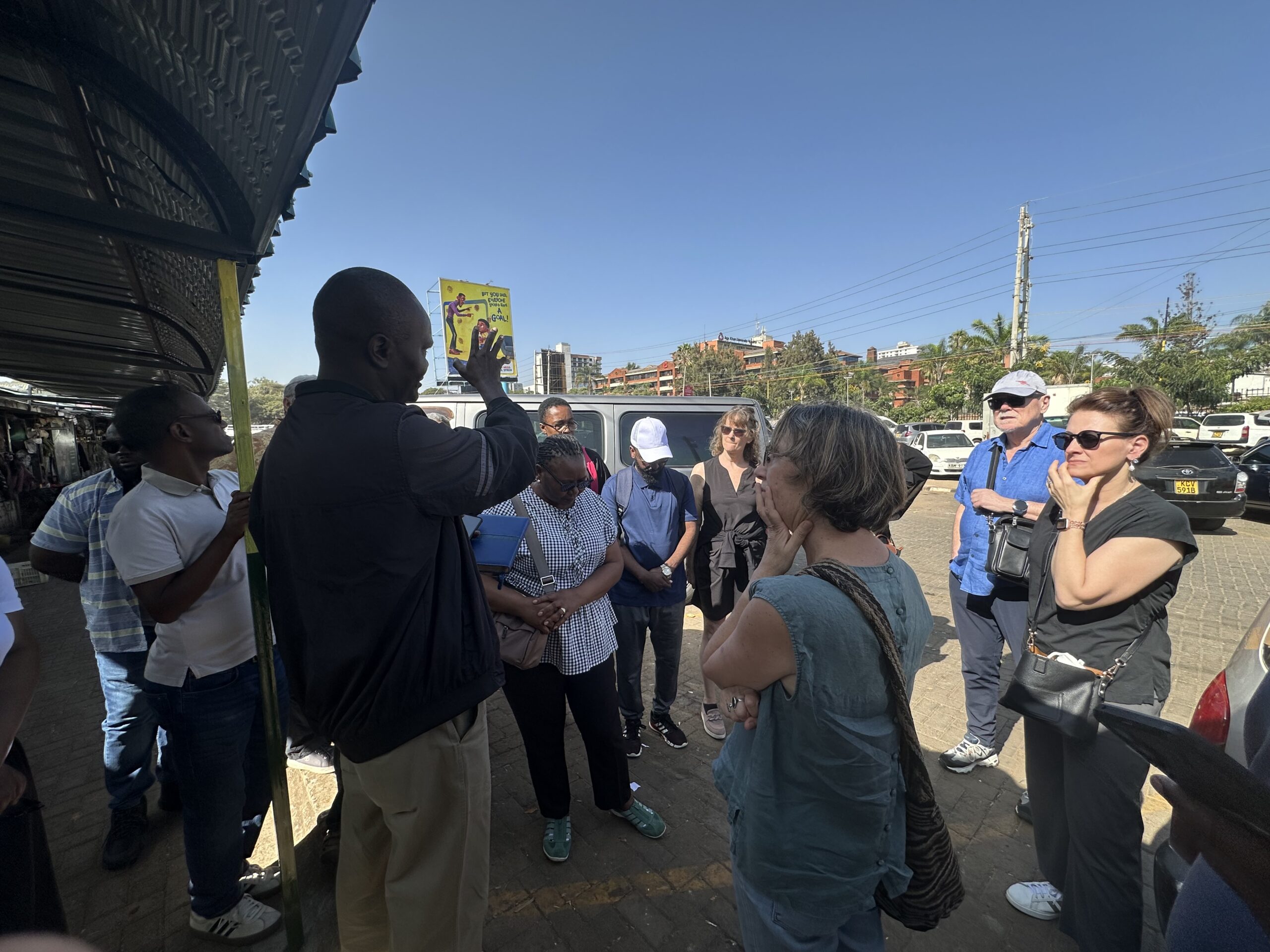
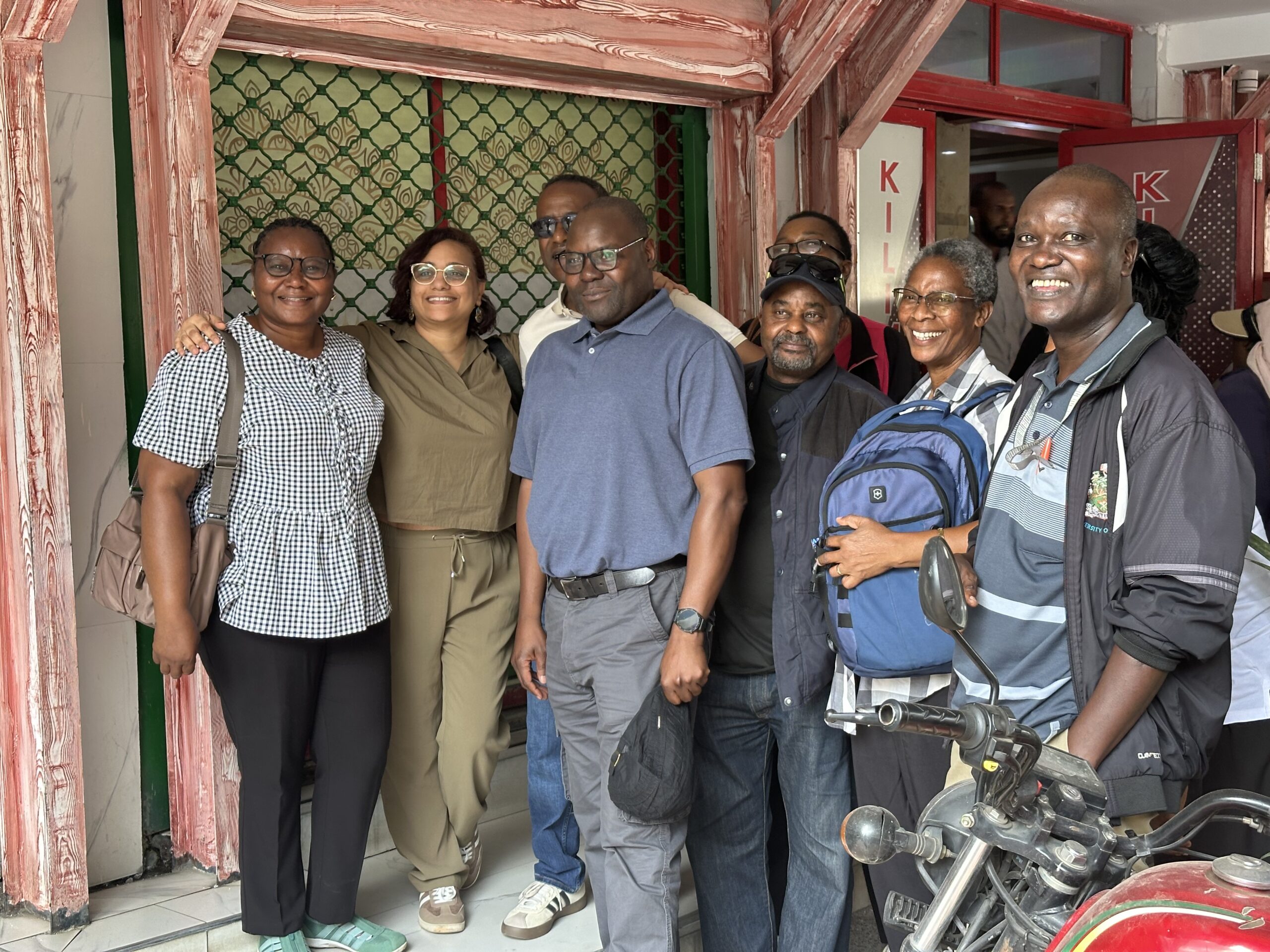
On the third day, MiFOOD members participated in a learning journey to a local food market and the Eastleigh area, where formal and informal businesses closely intersect and operate side by side. The guided visit provided participants with first-hand exposure to the vibrancy of the city’s food economy, including opportunities to engage with vendors and observe trading practices. The experience deepened participants’ understanding of the complexity of Nairobi’s urban entrepreneurial landscape, particularly the central roles that migrants and women play in sustaining local markets and contributing to the city’s economy.
About the Women Feeding Cities Project
The WFC project is part of the MiFOOD Network (Migration, Food and Development), a global research collaboration examining the intersections of migration, informality, gender, and urban food security. Through multi-country research and policy engagement, WFC seeks to better understand and support the women entrepreneurs who sustain urban informal food ecosystems.