
Mexico

The Role of (transit) Migrants in Urban Food Systems in Three Mexican Cities

The aim of the research is to analyze the role played by migrants from any country of origin in the Mexican urban food systems in a contemporary period market by indefinite and precarious periods of “transit”, where migrants find themselves in need of work and food. We will focus on three cities that are key […]

The Role of (transit) Migrants in Urban Food Systems in Three Mexican Cities Read More »

IPaSS: Informality, Inclusive Growth and Food Security in Cities of the Global South

This foundation project of the Hungry Cities Partnership is funded by the SSHRC and IDRC under the International Partnerships for Sustainable Societies Program (IPaSS). The project has facilitated the formation of an initial seven-city research and policy network across the Global South linked to researchers at five Canadian universities. The project has embarked on a

IPaSS: Informality, Inclusive Growth and Food Security in Cities of the Global South Read More »

Women Feeding Cities Project: Gender-Transformative, Resilient, and Sustainable Covid-19 Recovery of the Informal Food Sector in Secondary Cities

This project funded by IDRC will ‘scale-down’ our NFRF-funded Women Feeding Cities Project by focusing on these gaps in secondary cities of less than 500,000 in partner countries. Using a gender-responsive lens, we will investigate the multiple ways in which the Covid-19 crisis has disrupted the livelihoods of women in the informal food economy and

Women Feeding Cities Project: Gender-Transformative, Resilient, and Sustainable Covid-19 Recovery of the Informal Food Sector in Secondary Cities Read More »

Women Feeding Cities Project: Building a Gender-Transformative, Resilient, and Sustainable Informal Food Sector for COVID-19 Recovery

This Hungry Cities Partnership (HCP) comparative international project is funded by NFRF. It will examine the food security impacts of COVID-19 on micro-enterprises owned by women in the informal urban food sector, their households and communities in four HCP cities: Maputo, Windhoek, Kingston (Jamaica) and Mexico City. It has four main objectives: (a) compare the

Women Feeding Cities Project: Building a Gender-Transformative, Resilient, and Sustainable Informal Food Sector for COVID-19 Recovery Read More »

Supermarkets in Mexico and the Mexico City Metropolitan Area: Logics of Territorial Insertion and Socio-Spatial Inequalities

The paper analyzes the logics of expansion and spatial distribution of supermarkets at three scales: global, national (Mexico), and especially metropolitan (Mexico City), from rich to poor spaces and social categories. It seeks to understand how supermarkets, in a country like Mexico where they initially target mainly the middle class, reproduce or mitigate socio-spatial disparities.

Supermarkets in Mexico and the Mexico City Metropolitan Area: Logics of Territorial Insertion and Socio-Spatial Inequalities Read More »

Heterogeneity Among Merchants in Mexico City’s Municipal Markets

In the last decade and after nearly half a century of neglect, Mexico City’s public markets have once again made their appearance on the urban agenda, both in terms of policy and academic studies. This article, drawn on ethnographic fieldwork with merchants in three public markets, contributes to the burgeoning discussion on markets in two

Heterogeneity Among Merchants in Mexico City’s Municipal Markets Read More »
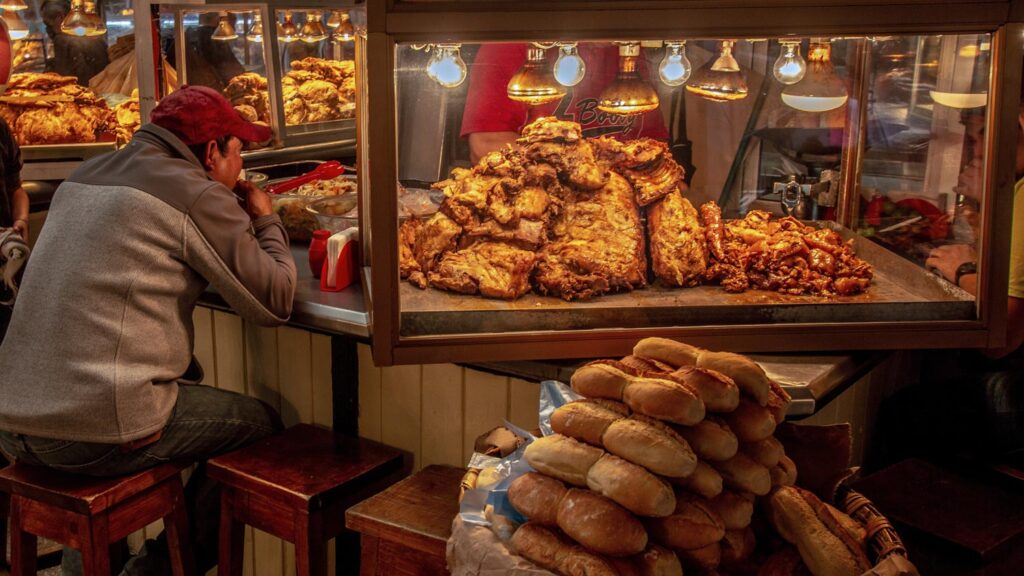
Incomplete Documentation, Isolation and Food Security among Central American Migrants in Mexico City

This paper examines some of the factors that contribute to food insecurity among the growing populations of Central American migrants who reside in Mexico City. It contributes to a growing body of literature that focuses on the relationship between migration and food security by analyzing the specific challenges faced by migrants who are (semi)permanently settled

Incomplete Documentation, Isolation and Food Security among Central American Migrants in Mexico City Read More »

Insecure Infrastructures: The Affects and Effects of Violence in Mexico’s Food System

This article puts into dialogue anthropological discussions on violence, infrastructures, food systems, and affect to argue for the importance of understanding the role of affective responses in shaping not only subjectivities or experiences of individuals but also the networks, infrastructures, and institutions in which they participate. Set in contemporary Mexico, where concern about criminal violence

Insecure Infrastructures: The Affects and Effects of Violence in Mexico’s Food System Read More »

Les supermarchés au Mexique et dans la Zone Métropolitaine de Mexico

The article analyses the logics of expansion and spatial distribution of supermarkets at three scales: global, national (Mexico), and especially metropolitan (Mexico City), from rich to poor spaces and social categories. It seeks to understand how supermarkets, in a country like Mexico where they initially target mainly the middle class, reproduce or mitigate socio-spatial disparities.

Les supermarchés au Mexique et dans la Zone Métropolitaine de Mexico Read More »

Scroll to Top