

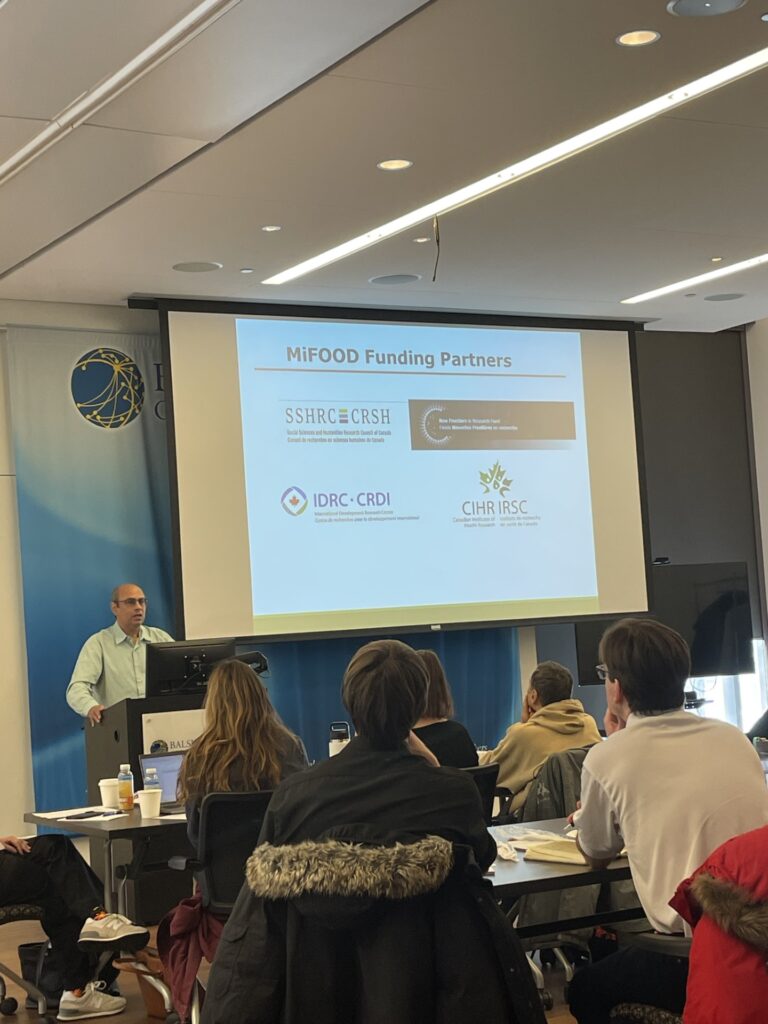
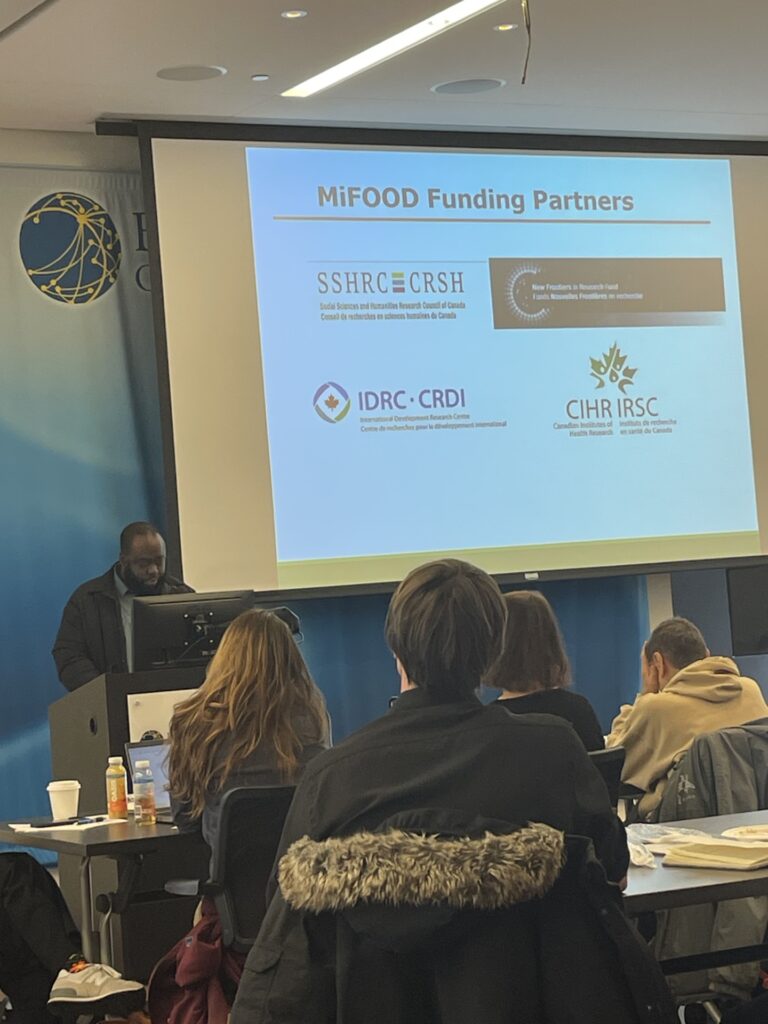
The MiFOOD Network and the International Migration Research Centre (IMRC) co-hosted a landmark policy forum on December 4, 2025, convening policymakers, service providers, community leaders, researchers, and people with lived experience to translate new evidence on migrant food insecurity into practical, locally relevant action. With the financial support of the Social Sciences & Humanities Research Council (SSHRC) and the Canadian Institutes of Health Research (CIHR), as well as logistical support from the Waterloo Region Immigration Partnership, the event marked the culmination of a multi-year CIHR-funded study exploring how migrant and refugee households in Canada, South Africa, and Ecuador navigated food insecurity during and after the COVID-19 pandemic.
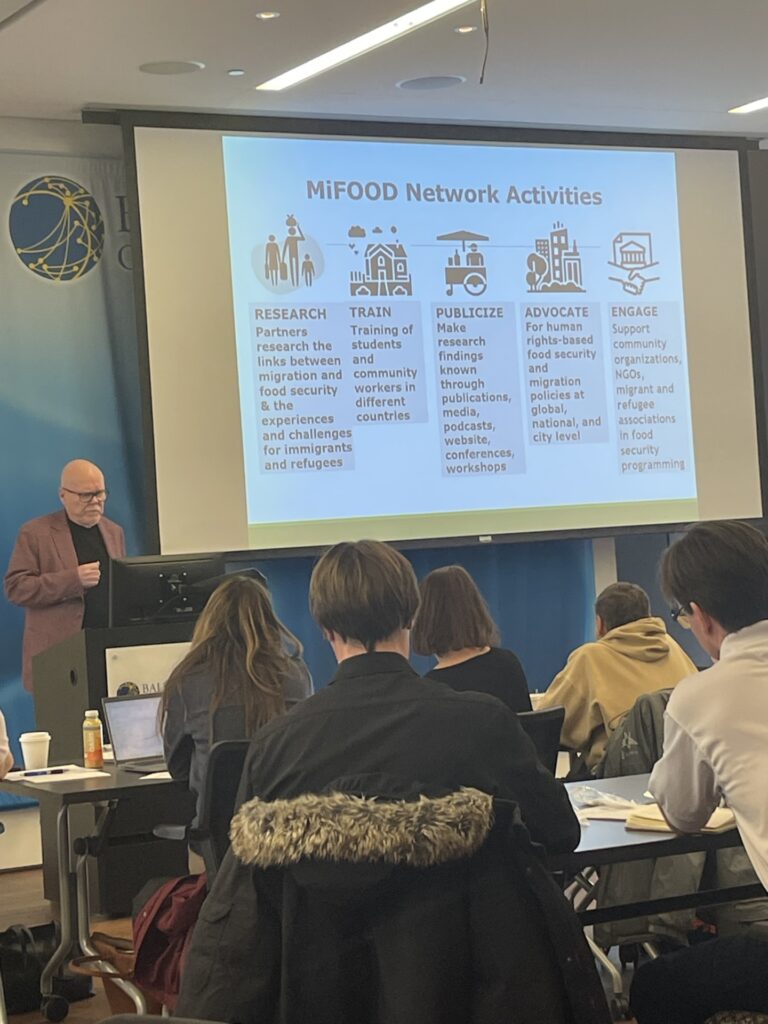
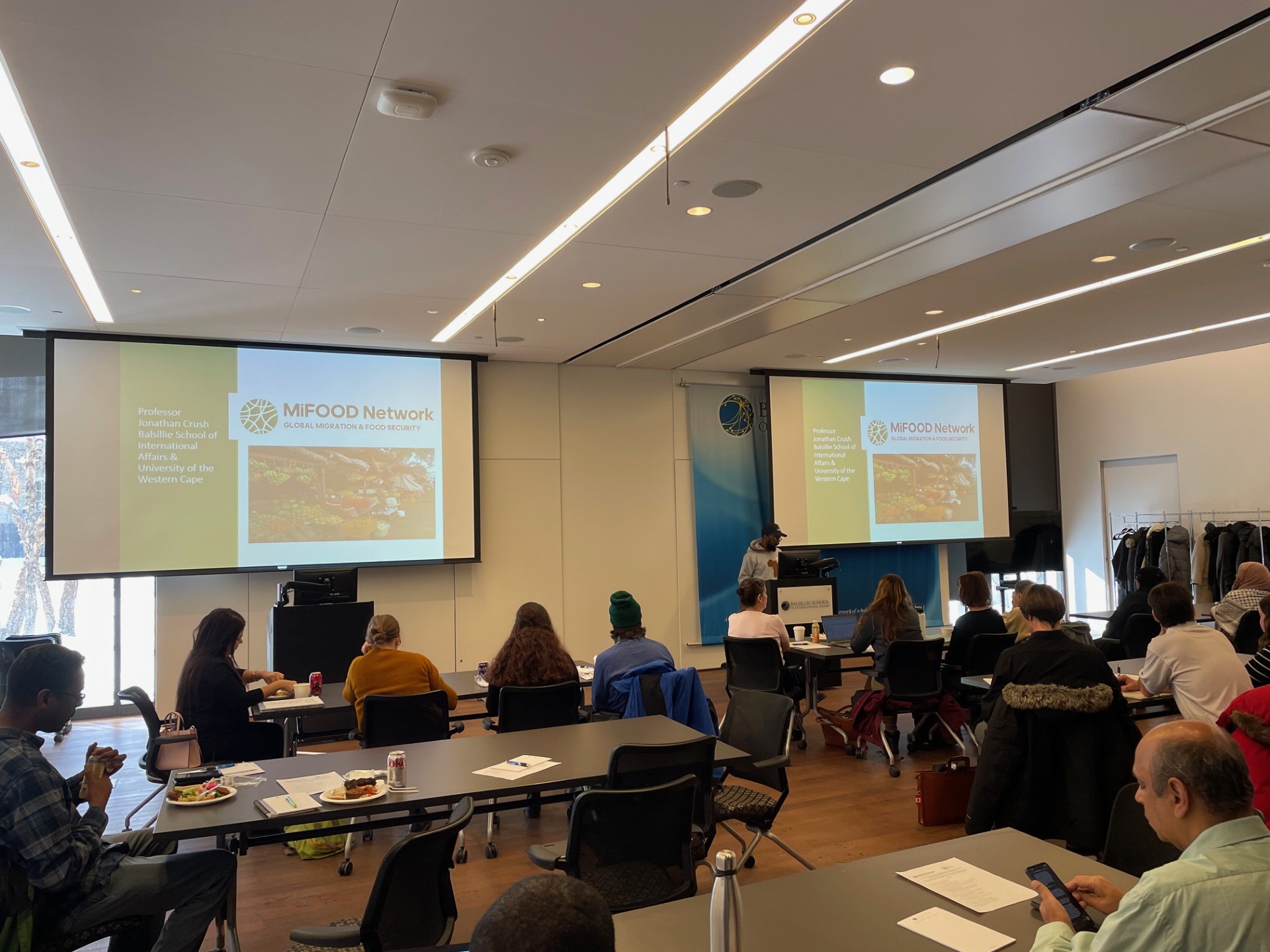
Held at the Balsillie School of International Affairs (BSIA), the forum began with opening remarks from MiFOOD Network Director Jonathan Crush, followed by an overview of the rationale, objectives and methodology of the three-year international study presented by Zhenzhong Si. Short research presentations featured Mercedes Eguiguren (Ecuador study), Sean Sithole (South Africa study), Sujata Ramachandran (gender perspectives, Waterloo Region), Zack Ahmed (Somali community findings, Waterloo Region), and Dr. Neil Arya (health impacts and newcomer well-being). Their contributions provided a comprehensive global and local evidence base that guided the forum’s subsequent discussions.
Broad Community Representation
The forum brought together representatives from a wide range of organizations across the region, reflecting the multi-sectoral nature of food security challenges. Participants included the MiFOOD research team, graduate students at the BSIA, research participants from Syrian and Somali communities, staff or representatives from United Way Waterloo Region Communities, Al-Salam Islamic Centre, the Kitchener Centre MPP Office, the Waterloo Region Community Garden Network, the Food System Roundtable of Waterloo Region, the Food Bank of Waterloo Region, the Cambridge Food Bank, Region of Waterloo Public Health, Region of Waterloo Housing Services, and the Waterloo Region District School Board (WRDSB).
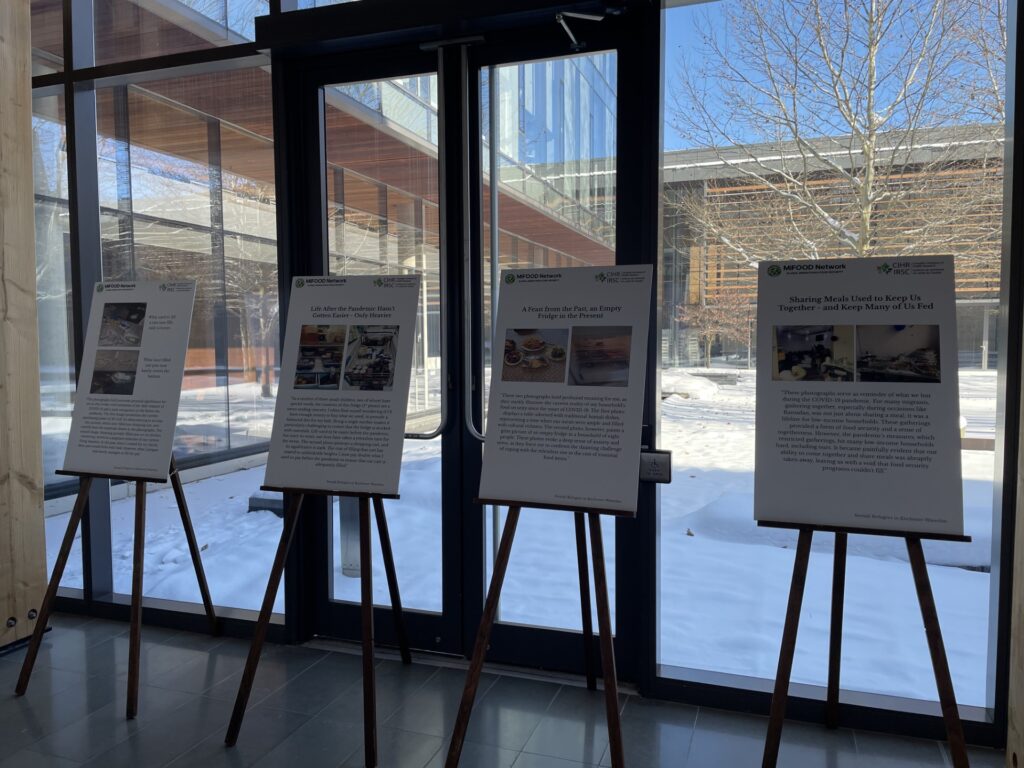
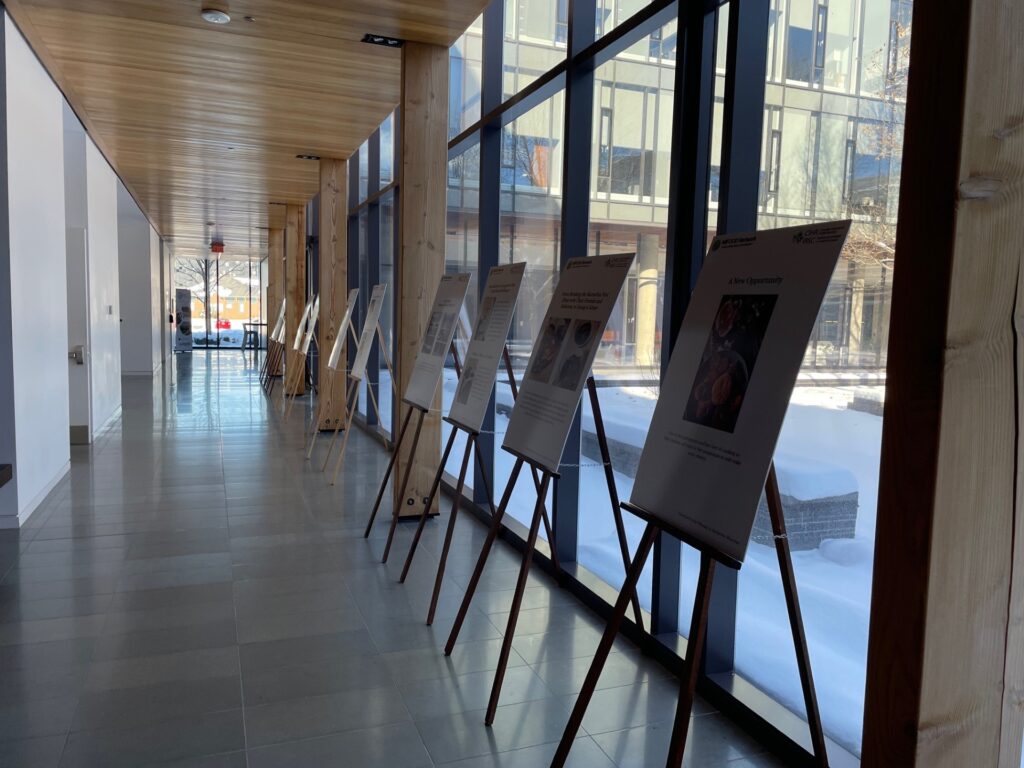
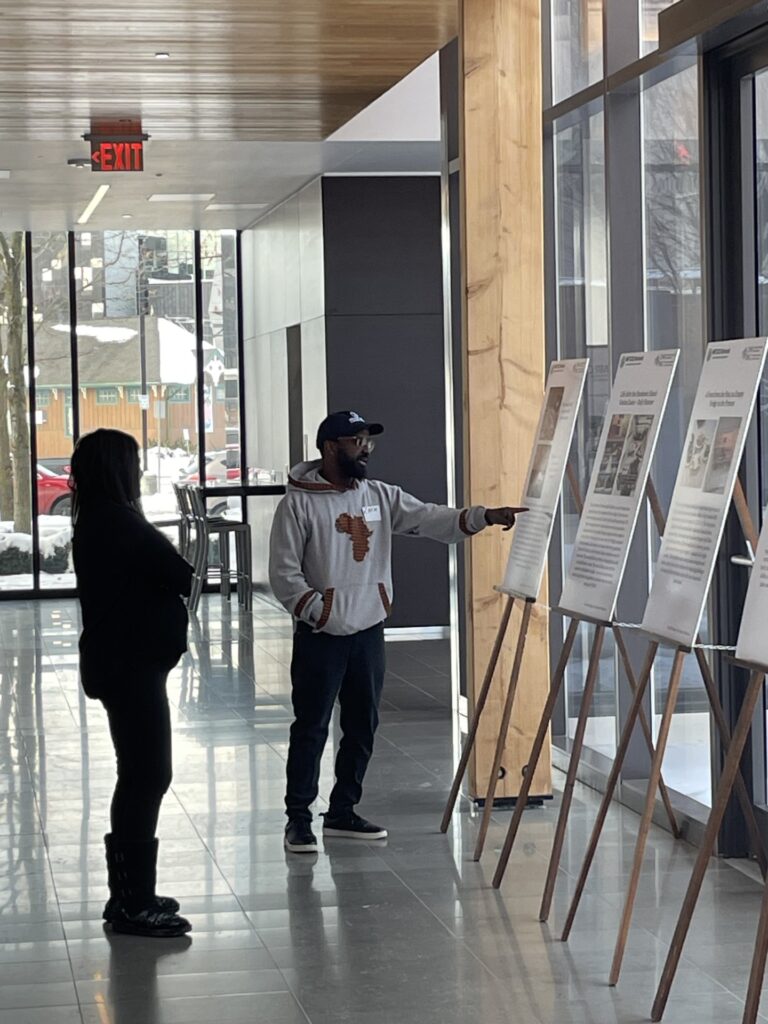
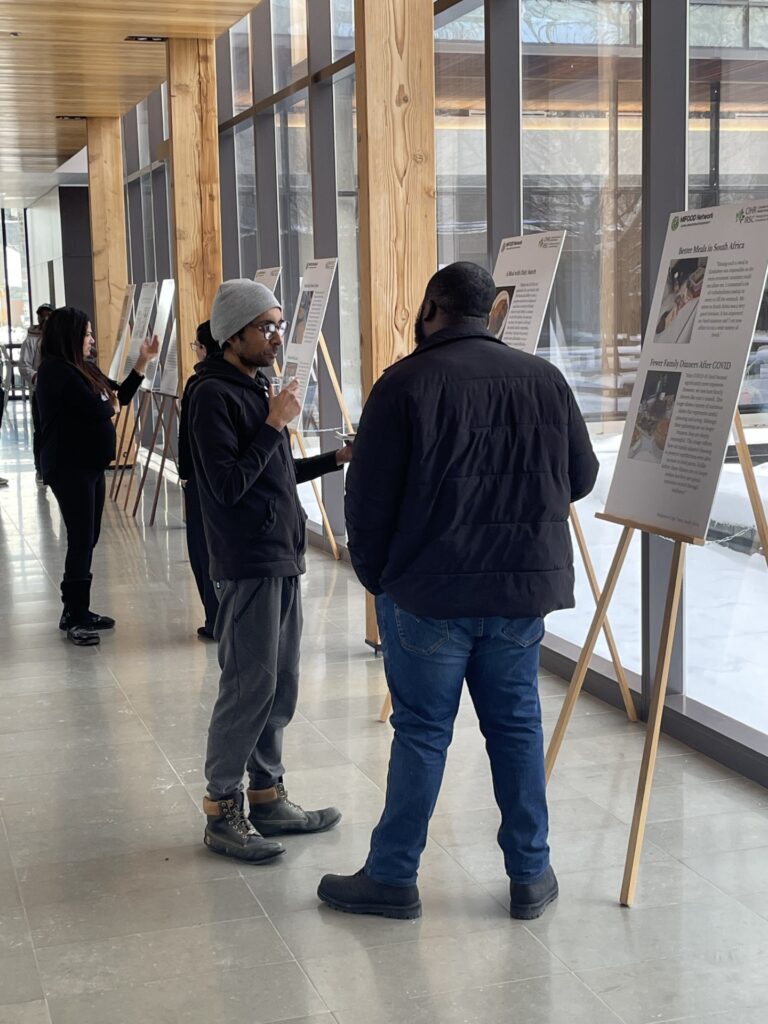
Participants actively participated in the photo exhibition that showcased the struggles and resilience of the local migrant communities, and the roundtable policy discussion that identified policy gaps and recommendations in the current landscape of food security governance. Their insights, shaped by daily work with newcomer communities and food system actors, bridged the divide between research findings and actionable policy.
Local Realities in a Rapidly Growing Region
The Waterloo Region component of the study provides one of the clearest portraits to date of how refugee households experience food insecurity in a rapidly expanding secondary city. Based on surveys, interviews, and photovoice projects with Somali, Syrian and Afghan participants, the findings highlight widespread food insecurity intertwined with rising housing costs, transportation gaps, gendered caregiving pressures, and mental health strain.
Although many families maintained dietary diversity, this was achieved only through rationing, skipping meals, and stretching limited budgets. Escalating rent forced households to choose between groceries and housing. Access to halal and culturally familiar foods remained uneven, with transportation barriers emerging as a key factor limiting where and when families could shop.
The study highlights the gendered pressures intensified during the pandemic. Women in Somali and Syrian households took on the bulk of food-related labour including planning, meal preparation, navigating limited budgets, and caring for children and elders, while simultaneously managing online schooling and pandemic-related anxieties. Many reported fatigue and chronic stress. Men, meanwhile, faced the emotional burden of job loss or reduced employment hours, compounded by the moral obligation to continue sending remittances to relatives abroad despite shrinking household budgets.
Photovoice images, displayed during a dedicated exhibition at the forum, captured empty refrigerators, lengthy grocery receipts, health concerns, moments of isolation during lockdowns, as well as migrants’ strategies to cope with these challenges.
Comparative Findings from Ecuador and South Africa
The international research component underscored that migrant food insecurity is shaped by global as well as local forces.
In Ecuador, Venezuelan and Colombian migrants frequently reduced their meals to two per day, relied on cheap staples (mainly starch), and faced sudden income loss during lockdowns. Migrants’ exclusion from national social protection programs forced many to depend on neighbours or humanitarian organizations.
In South Africa, migrants faced xenophobia, restrictive immigration policies, exclusion from relief programs, and steep food price increases. Zimbabwean migrants were especially affected by disruptions to cross-border food networks. Female-headed households balanced severe local food shortages with substantial remittance obligations.
These comparisons highlighted shared structural drivers among the three study sites, such as inflation, precarious employment, and policy exclusion, while emphasizing the importance of tailored, context-specific responses.
Forum Dialogue and Emerging Priorities
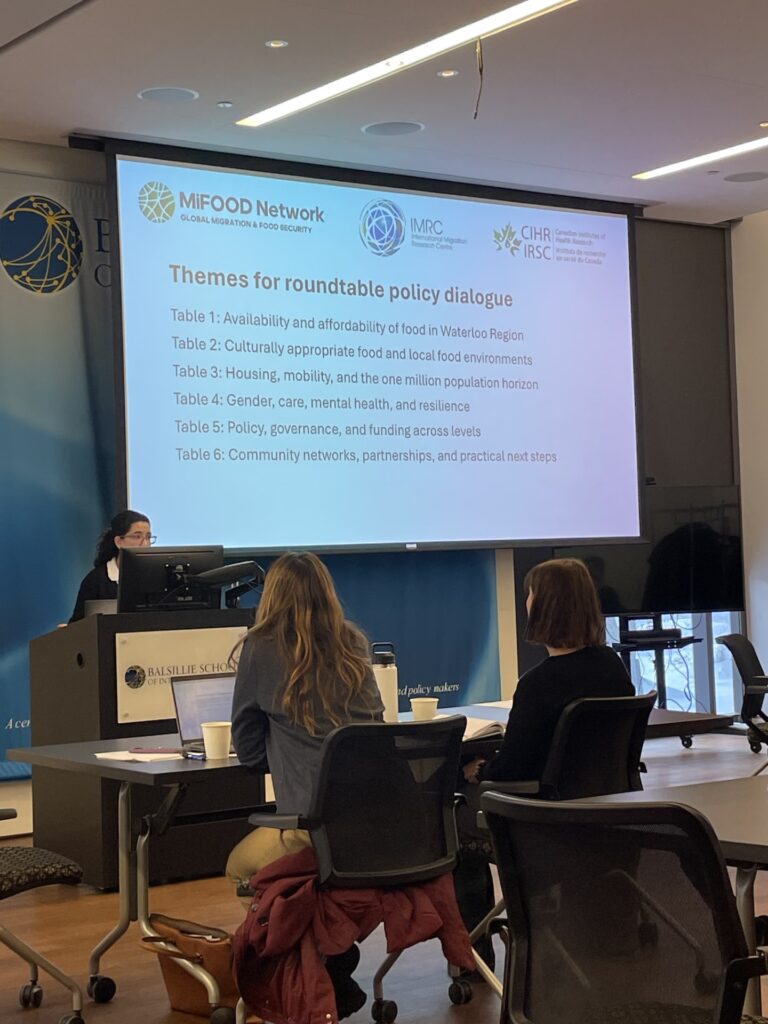
Following the research presentations, attendees were divided into six thematic roundtables to discuss food availability and affordability, cultural food access, housing and transit, gendered experiences, community networks, and governance through cross-sectoral partnership. The discussions generated practical insights informed by the diverse institutional presence in the room.
Attendees highlighted that the food insecurity of newcomers in Waterloo Region is driven primarily by structural pressures, especially high rents, low wages, and limited transportation options. Food banks are increasingly used as regular grocery sources. Yet culturally appropriate foods, particularly halal items, remain inconsistent.
Transportation barriers emerged as a major obstacle, particularly for households without cars who must travel long distances to affordable or culturally relevant retailers. Participants stressed that food access should be incorporated into regional growth and housing plans.
Gendered impacts were also emphasized. Women and girls bear much of the food-related labour and caregiving responsibilities and often face significant mental health strain. Female-headed households were identified as especially vulnerable.
Community and faith-based organizations were widely recognized as critical supports during the pandemic and remain essential today. However, many grassroots groups lack stable funding and are not fully integrated into formal service systems.
Participants called for better coordination across governments, service providers, and community networks, alongside updated funding models that reflect rapid population growth and the rising cost of living. Many expressed confidence that Waterloo Region has the collective capacity to strengthen newcomer food security by involving migrant communities meaningfully in shaping solutions.
Next Steps and Continuing Collaboration
The MiFOOD Network will now prepare a policy communiqué synthesizing the forum’s insights and outlining priority actions. Research teams will continue supporting local partners through tailored briefings, data sharing, and collaborative initiatives to ensure that evidence from the three-country study informs Waterloo Region’s ongoing post-pandemic recovery.
The forum reaffirmed that food insecurity is never solely about food. It is shaped by income, housing, transportation, caregiving, mental health, cultural belonging, and transnational responsibilities. As Waterloo Region continues to grow and diversify, supporting newcomer households is vital to building an inclusive, resilient food system.
The event demonstrated not only the depth of expertise across sectors but also a shared willingness to work toward a system that reflects the lived experiences of migrants and refugees. Much work lies ahead, but the forum underscored that the region possesses the knowledge, partnerships, and commitment necessary to drive meaningful change.
The local media of the Waterloo Region, the Record, attended the forum and interviewed the project’s PI, Professor Jonathan Crush, and the event facilitator, Zack Ahmed. A report article “Global food insecurity researchers find ‘widespread’ issues in Waterloo Region” has been released on December 7, 2025. Download the report article HERE.
The Agenda of the Forum is available HERE.
Note: The Photovoice exhibition will remain on display in the first-floor hallway of the BSIA until noon on Wednesday, December 10, 2025. We encourage all BSIA visitors to check out the powerful visual narratives shared by migrants.
Photo credit: All images by Sujata Ramachandran.