
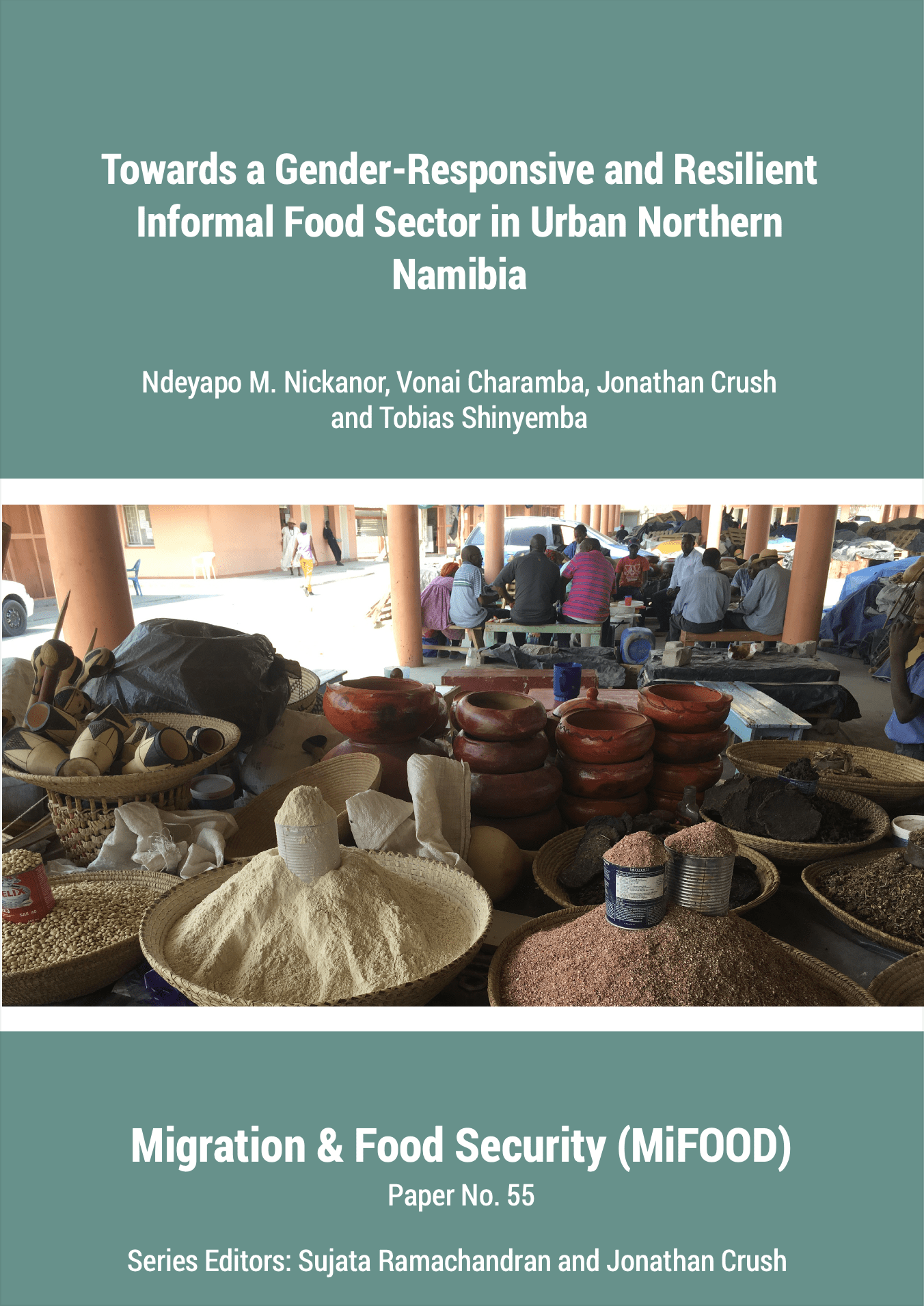
The COVID-19 pandemic caused severe disruption to Namibia’s vibrant urban informal economy. This paper examines the impact of the pandemic on the informal food sector in northern Namibia, with a focus on the towns of Oshakati, Ondangwa, and Ongwediva. The data come from a survey of 250 informal food vendors (200 women and 50 men) who were operating in the region’s municipal open markets before the crisis. The paper shows that although both women and men were affected, the women traders who dominate informal food vending had to absorb the most severe economic shocks. Although traders deployed varied adaptive strategies, these tactics produced only partial and uneven post-pandemic recoveries. Our findings confirm that the impacts of the pandemic were not gender neutral. Women-owned businesses were more severely affected than those owned by men, with higher rates of decline in customers and sales, as well as supply chain disruptions. Economic pressure was exacerbated by a major increase in women’s unpaid domestic labour, including childcare, cooking, and care for the sick and elderly. Most informal traders, both women and men, were excluded from government pandemic business support mechanisms, slowing their post-pandemic recovery. The paper summarizes and endorses recent post-pandemic national government policy measures to change the policy environment and provide greater support for the informal economy. If implemented at the municipal level, the new policy framework would make a significant break with past punitive approaches and go some way towards a gender-transformative, resilient, and sustainable post-pandemic recovery.
January 7, 2026
MiFOOD Paper No. 55