
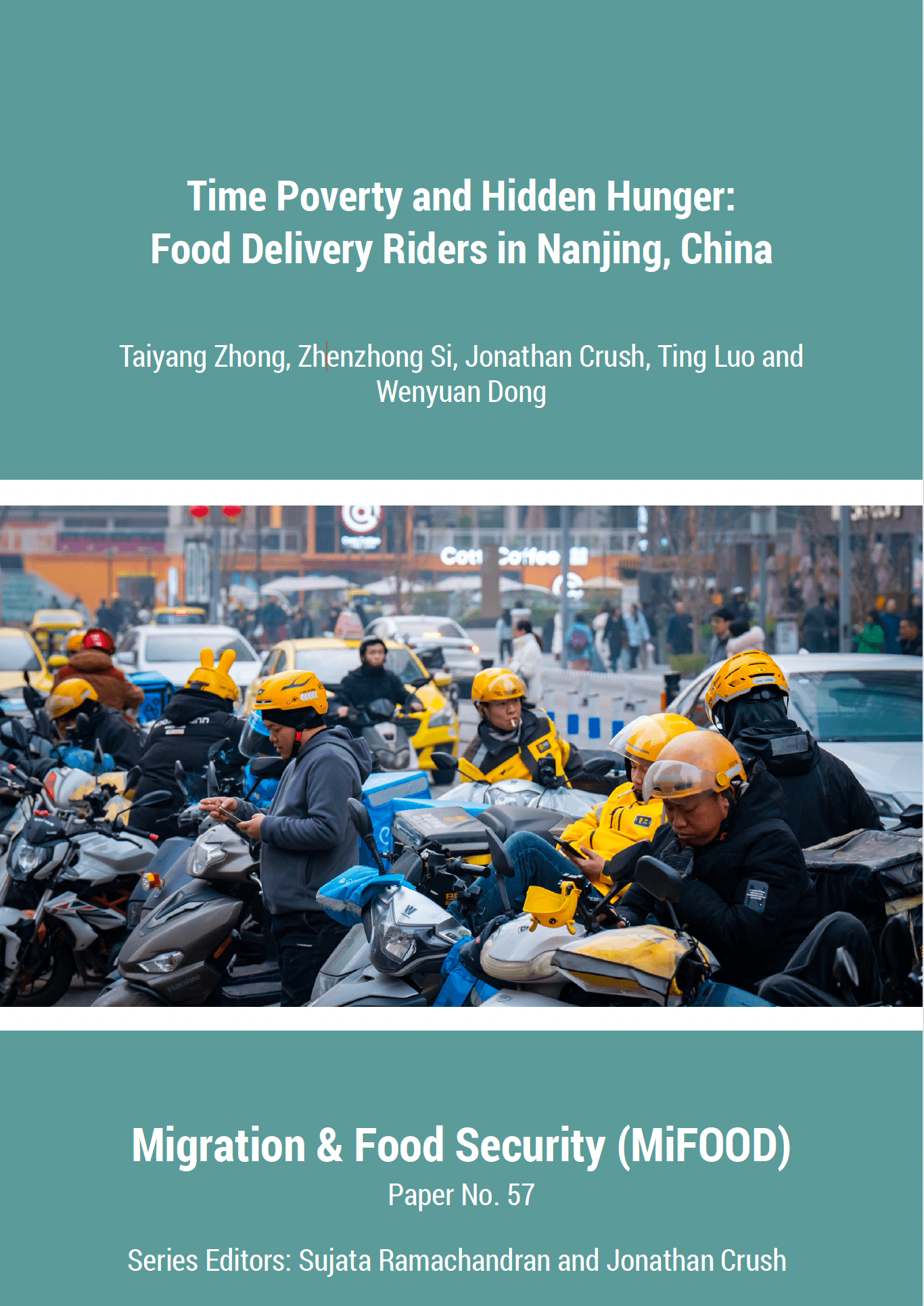
The rapid expansion of platform-based food delivery has made gig-economy riders essential actors in urban food provisioning, even as they contend with long working hours and substantial employment precarity. To date, there has been limited research on riders’ own food security and household dietary diversity. This paper examines both the direct and indirect mechanisms through which their work hours influence dietary outcomes using data from a 2024 survey of migrant food-delivery riders in Nanjing, China. The paper shows that time poverty associated with long work hours directly diminishes dietary diversity by constraining the time available for other activities, including food acquisition and preparation. However, it also indirectly enhances dietary diversity by raising household income. Because the detrimental time-related effect surpasses the positive income effect, the overall impact of extended work hours is a reduction in household dietary diversity. Therefore, the paper deepens understanding of the nutritional consequences of structural time poverty in the precarious gig economy and provides the first evidence from China on the pathways linking delivery work to household dietary diversity.
January 27, 2026
MiFOOD Paper No. 57
Featured City: Nanjing, China