
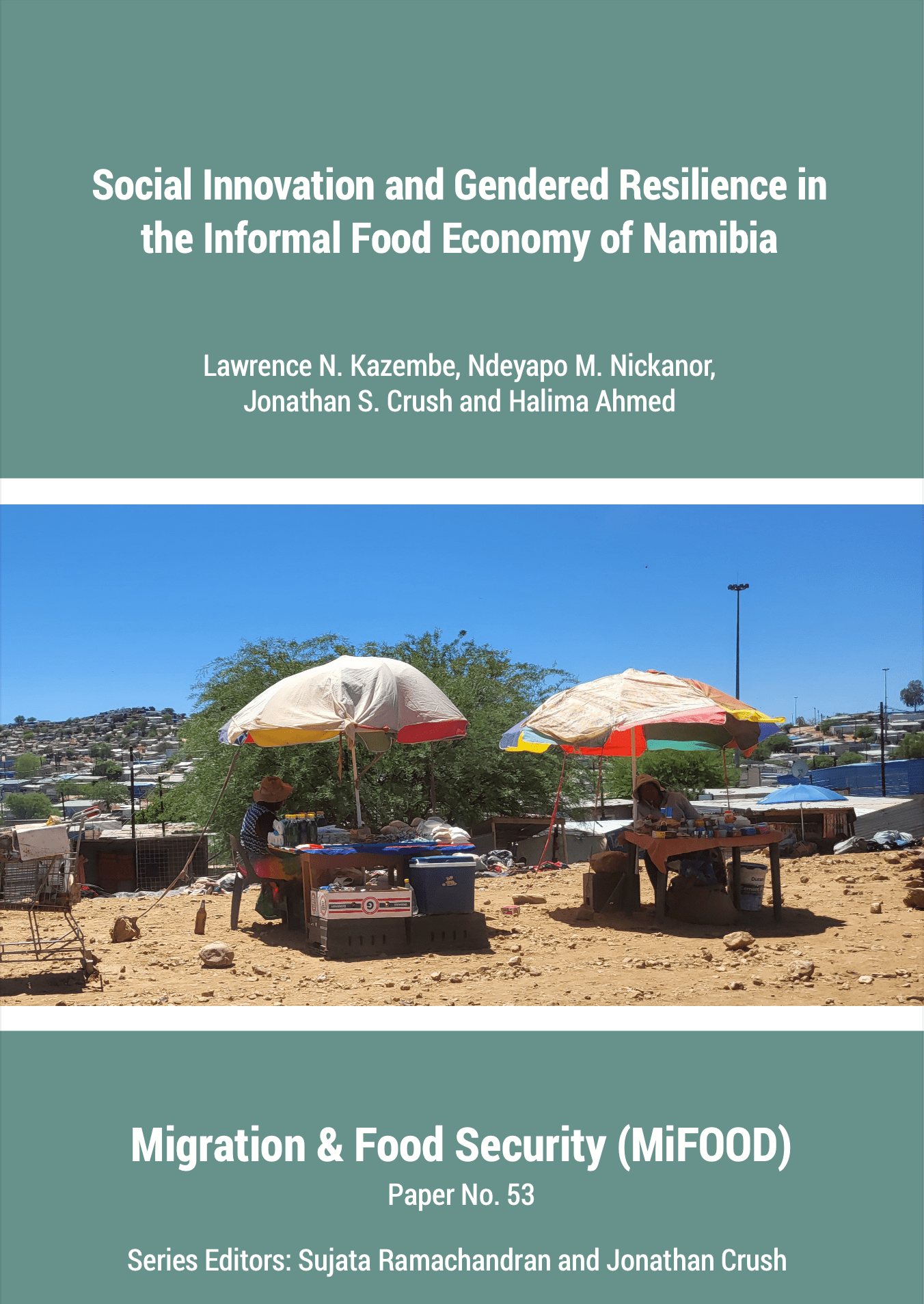
Informal food trading is a vital source of livelihood and food security in African cities, yet traders operate under precarious conditions requiring constant adaptation. This study examines how social innovations enable resilience among informal traders in Windhoek, Namibia, with attention to gendered pathways. Using a cross-sectional survey of 470 traders, three innovation constructs – adaptive pricing, customer credit, and communications and e-payments were modelled alongside enterprise growth as a resilience outcome. Structural equation modelling (SEM) estimated direct and indirect effects of determinants such as education, startup capital, vendor type, and financing. The findings highlight social innovations as everyday mechanisms of resilience and call for gender-responsive policies to expand education, finance, and digital inclusion for informal traders.
January 7, 2026
MiFOOD Paper No. 53
Featured City: Windhoek, Namibia