
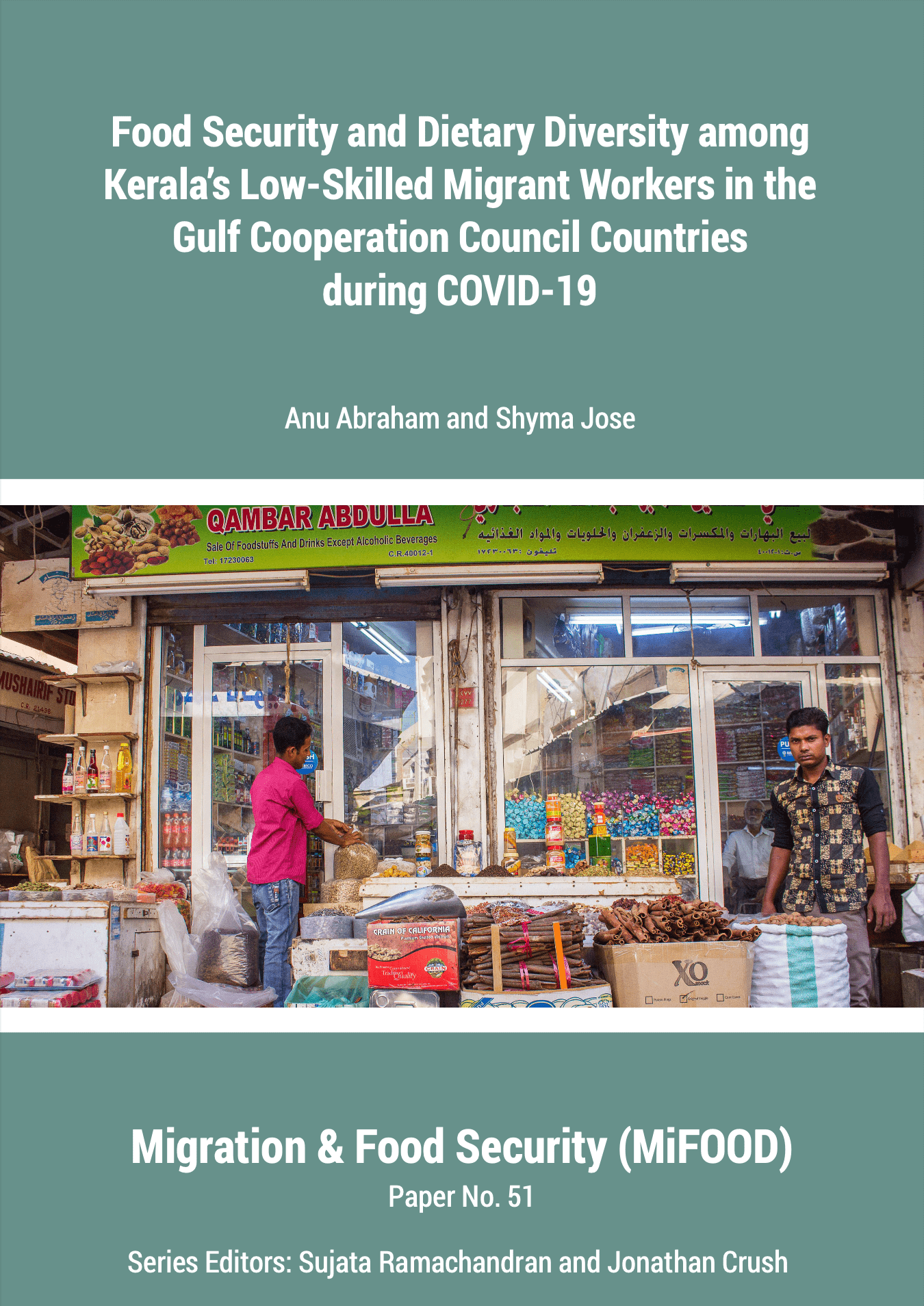
This paper examines food security and dietary diversity among low-skilled migrant workers from Kerala, India, who worked in the Gulf Cooperation Council (GCC) countries and returned during the COVID-19 pandemic. Data was gathered through face-to-face surveys with 100 return migrants in key sending districts of Kerala during 2022 and 2023. Our research investigates whether these migrants experienced poorer diets and lower dietary diversity in their destination countries compared to those in Kerala, and whether broader shocks, such as the COVID-19 pandemic, affected their food security. The significant economic impacts of the COVID-19 pandemic disrupted the stability of food supplies for vulnerable groups, such as low-skilled migrants. It also considerably limited their access to adequate food in the GCC region. The findings reveal that nearly a quarter of respondents faced severe food insecurity during the pandemic in their destination settings. Their dietary diversity also declined during this period, as migrants faced major socioeconomic shocks, with many being forced to return to Kerala. Diaspora networks and informal support systems played a crucial role in helping migrants manage these vulnerabilities and maintain access to food amid the pandemic. However, dietary diversity improved after their return to Kerala, surpassing levels seen during periods of food security at the destination. The study highlights the urgent need to establish support systems that safeguard the rights of low-skilled migrant workers and ensure their social protection in the receiving countries.
November 10, 2025
MiFOOD Paper No. 51