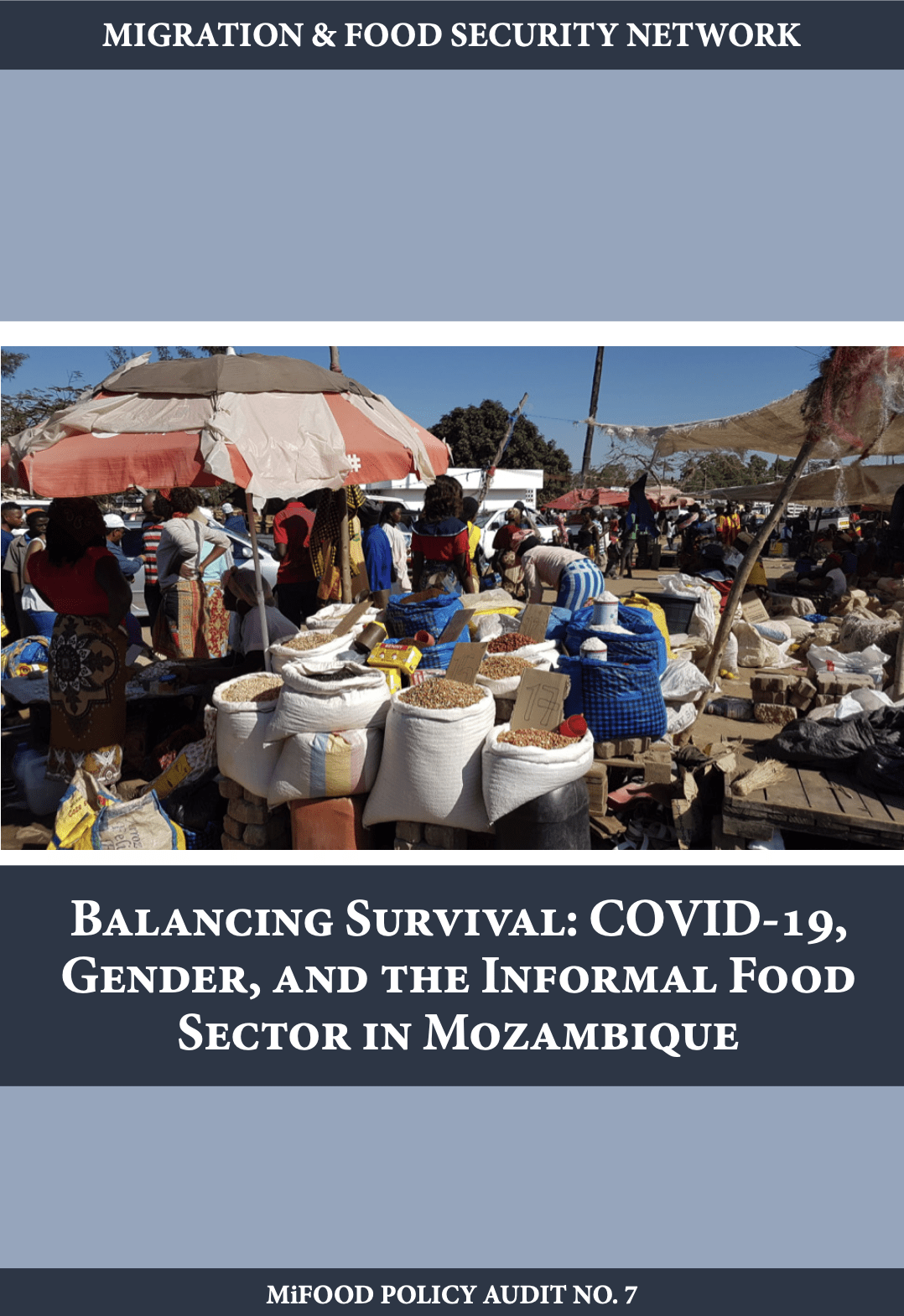
COVID-19 intersected with longstanding structural challenges in Mozambique, including widespread poverty, deep inequality, and a labour market dominated by informal employment, creating a multidimensional crisis affecting health, livelihoods, and food access. While the pandemic was primarily framed by the government as a public health emergency, its most enduring consequences were felt in disruptions to everyday survival strategies and livelihoods, especially in urban areas where many households depend heavily on informal trade and daily income.
This policy audit examines how the COVID-19 pandemic, public health measures, and economic instability reshaped food security in Mozambique. Drawing on multiple sources, including government data, published studies, and survey findings, it maps how COVID-19 deepened food insecurity in Mozambique. It examines the interconnections among containment measures, informal livelihoods, and household food access, and assesses the extent to which public policy responses addressed (or failed to address) the specific vulnerabilities of women in the informal food economy. Particular attention is paid to the gendered impacts of the pandemic on informal food systems and the livelihoods of women food vendors, whose work is essential to urban food access and affordability.