
China

Role of Migrants in Urban Food Retailing: Wet Market Vendors and Takeaway Riders

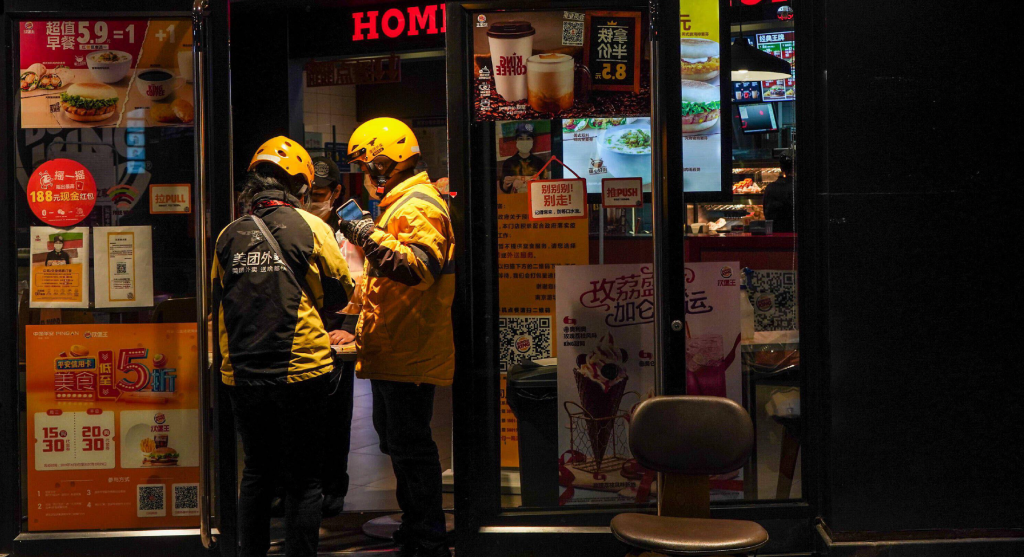
This research focuses on understanding the characteristics of migrant takeaway riders and migrant vendors in wet markets, how they operate their businesses, and their role in Nanjing’s urban food system. It aims to investigate the following questions: Firstly, we intend to analyze the characteristics of these migrant workers in the two sectors, employing a comparative […]

Role of Migrants in Urban Food Retailing: Wet Market Vendors and Takeaway Riders Read More »

Understanding of the Reciprocal Links Between Migration and Food Security in Nanjing and the Nearby Changzhou Cities, China

The core issue of this research is to analyze food access, nutritional intake and food safety cognition level and their influencing factors among the migrants in China. Subsequently, we further make a comparative study and heterogeneity analysis from the flow direction (rural-to-urban and urban-to-urban migrants) and urban scale (regional central city Nanjing and its nearby

Understanding of the Reciprocal Links Between Migration and Food Security in Nanjing and the Nearby Changzhou Cities, China Read More »

New Immigrant Destinations and the Role of the Migration Industry: Moving Filipino Domestic Workers to Mainland China

In recent years, while scholarly work on new immigrant destinations (NIDs) within the United States and Europe has increased, little attention has been given the role and significance of the migration industry in promoting the emergence of NIDs. This is a particularly significant lacuna as some Asian nations are undergoing dramatic migration transition despite the

New Immigrant Destinations and the Role of the Migration Industry: Moving Filipino Domestic Workers to Mainland China Read More »

Evolving Food Security Challenges Facing Internal Migrants during the COVID-19 Pandemic in Chinese Cities

The COVID-19 pandemic has significantly exacerbated the economic, social and political vulnerabilities of internal and international migrants and increased their food insecurity in several cities of the Global South. So far, very little attention has been paid to the dynamics of internal migrants’ food security in urban China since the emergence of the pandemic. Based

Evolving Food Security Challenges Facing Internal Migrants during the COVID-19 Pandemic in Chinese Cities Read More »

IPaSS: Informality, Inclusive Growth and Food Security in Cities of the Global South

This foundation project of the Hungry Cities Partnership is funded by the SSHRC and IDRC under the International Partnerships for Sustainable Societies Program (IPaSS). The project has facilitated the formation of an initial seven-city research and policy network across the Global South linked to researchers at five Canadian universities. The project has embarked on a

IPaSS: Informality, Inclusive Growth and Food Security in Cities of the Global South Read More »

Assessing and Mitigating the Food Security Consequences of COVID-19 in China, Ecuador and South Africa

The proposed research will identify the immediate and longer-term impact of COVID-19 on household food security in cities, and will assess and improve fast-evolving social and policy countermeasures to enhance food security. Our research objectives are to: 1) Investigate the immediate food security challenges resulting from quarantine measures, unstable food supply, and fear of shopping

Assessing and Mitigating the Food Security Consequences of COVID-19 in China, Ecuador and South Africa Read More »

The Nanjing Model: Comprehensive Food System Governance, Localization and Urban Food Security in China

Food supply localization has been extensively studied and advocated in North America and Europe, focusing on its oppositional stance to food system globalization, long food supply chains, the disconnect between producers and consumers, and a desire to reconnect urban consumers with small farmers in the hinterland of cities. The Northern model of city-region food localization

The Nanjing Model: Comprehensive Food System Governance, Localization and Urban Food Security in China Read More »

Governing for Food Security During the COVID-19 Pandemic in Wuhan and Nanjing, China

The global COVID-19 pandemic has elicited a range of public health governance responses. One common result has been an associated disruption of food supply chains and growing urban food insecurity. Policy responses to this situation have not yet received sufficient research attention. This paper therefore focuses on the urban food security implications of China’s zero-COVID

Governing for Food Security During the COVID-19 Pandemic in Wuhan and Nanjing, China Read More »

Urban Food Insecurity and the Impact of China’s Affordable Food Shop (AFS) Program: A Case Study of Nanjing City

Food subsidies are widely implemented as part of government policies globally to mitigate food insecurity amongst the urban poor. Subsidies to retail outlets are one a type of supply-side subsidy designed to make food more affordable to low-income consumers. China’s Affordable Food Shop (AFS) program introduced by the central government in 2011 and implemented by

Urban Food Insecurity and the Impact of China’s Affordable Food Shop (AFS) Program: A Case Study of Nanjing City Read More »

Scroll to Top