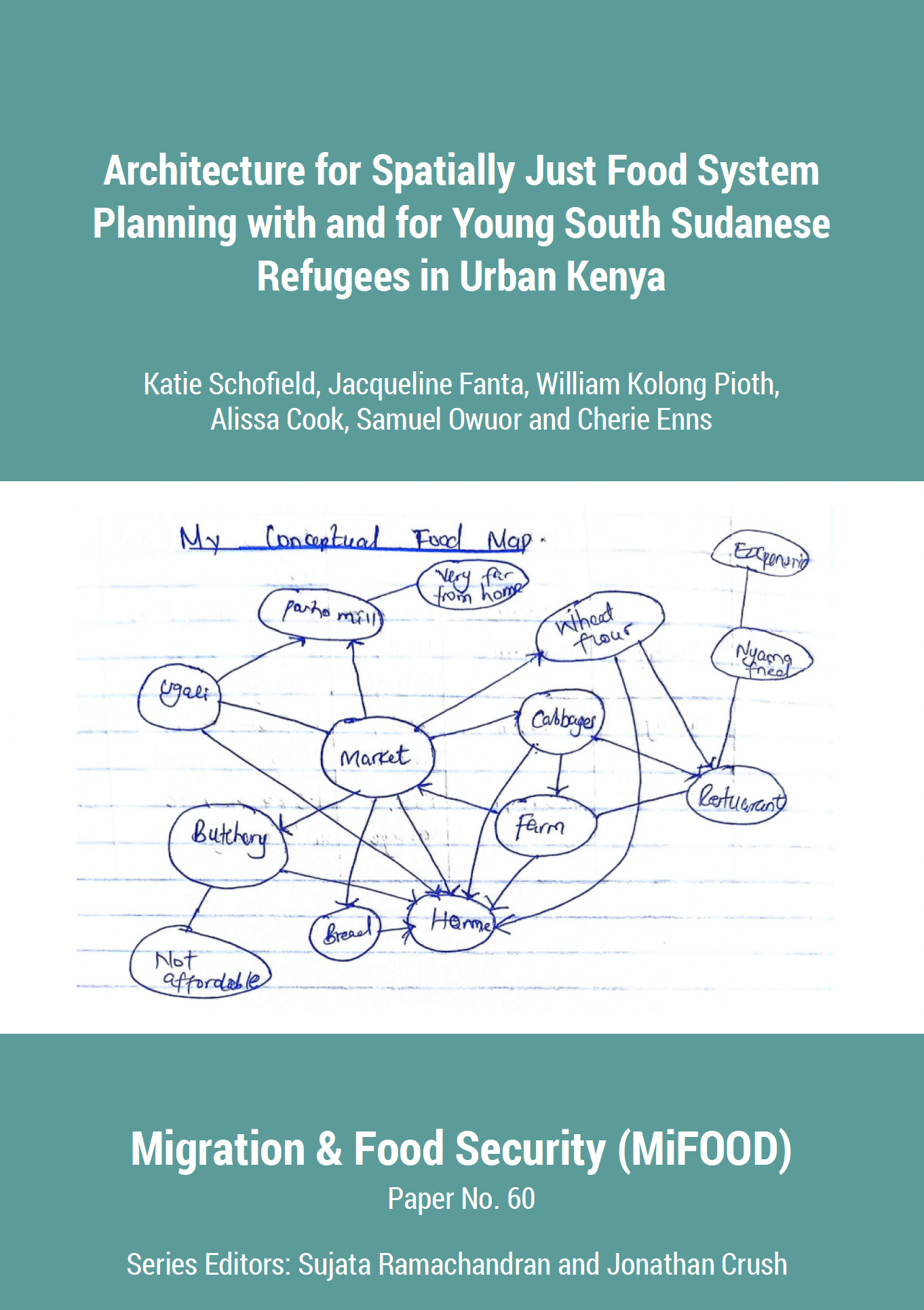

Challenges to the health and wellbeing of youth refugees in Kenya are well documented, particularly in refugee camps. However, amid protracted crises in the region, changes in refugee camp legislation and reduced funding are driving the further urbanization of refugees, necessitating a greater focus on understanding the hardships, movements, and challenges young urban refugees face. The focus of this paper is to document research on mapping the food supply chains, including points of intersection for young South Sudanese urban refugees in Kenya, and to identify barriers, constraints, and opportunities for procuring, growing, and selling food. This youth-led study, a follow-up to previous findings, included 40 participants aged 19 to 32. Youth food-resilience stories highlight critical areas for strategic intervention and provide insights into the design of spatially just and economically inclusive urban spaces. Applying a multimethod approach, including food diaries, food maps, and survey tools embedded in a learning platform, the paper weaves a narrative that highlights youth ingenuity in food security and provides insights for governments, policymakers, community leaders, and donors to support responsive, economically inclusive community design in addressing social challenges. Our findings indicate that improving the quality of life and food security of refugee youth is complex and requires a holistic approach. Without education and improvements in livelihoods, including urban agricultural opportunities, refugee youth’s health and wellbeing will continue to be affected.
March 19, 2026