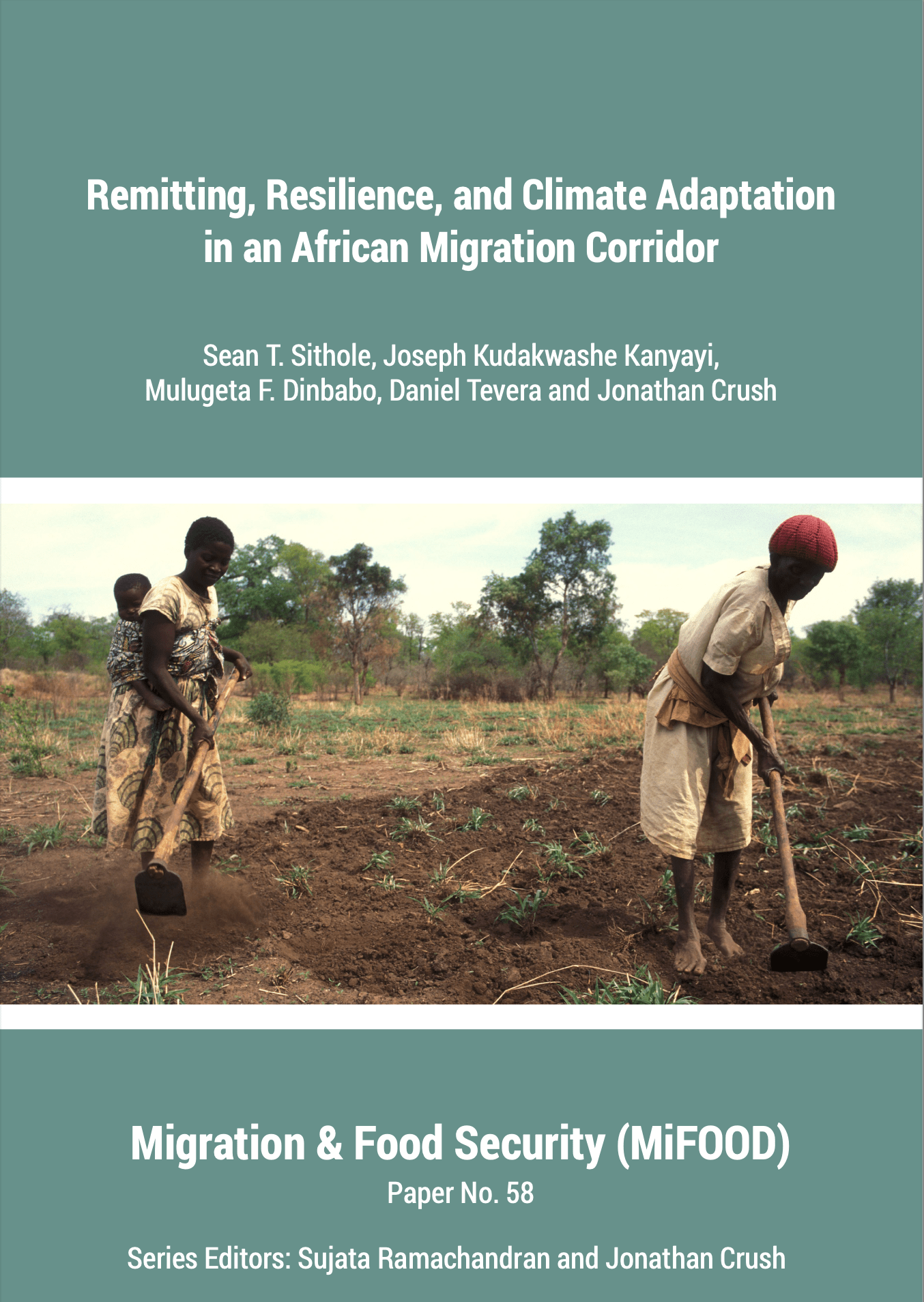
Climate change and crises are exacerbating environmental vulnerabilities across Southern Africa, contributing to population displacement and migration, thereby affecting internal and cross-border migration flows. In this changing landscape, cross-border remittances (cash and in-kind, such as food remittances) are increasingly vital to supporting climate adaptation and resilience. This paper examines the current state of knowledge about the role of cross-border remittances in helping migrant-sending households to cope with climate change and climate-induced shocks. The article also discusses the strategies households use to improve livelihoods and strengthen community-level resilience. The review of evidence on the South Africa-Zimbabwe remittance corridor shows that changing forms of cross-border remitting can serve as a key coping and adaptation strategy to counter the adverse impacts of climate change. There is therefore an urgent need for research and policy attention to harness the significant potential of remittances to create climate-resilient livelihoods across Southern Africa.
January 28, 2026