
The COVID-19 pandemic presented numerous challenges to public health, the economy, and society across Namibia. Urban centres such as Windhoek became the epicentre of infections, while low-income and informal settlement households faced disproportionate exposure to health risks, loss of income, and food insecurity. The Namibian government implemented public health measures, including lockdowns, mobility restrictions, and the temporary closure of markets, schools, and many businesses. Although these efforts slowed transmission, their social and economic consequences were severe. Comprising over half of national employment and disproportionately employing women, Namibia’s informal sector was significantly impacted by restrictions on public gatherings, market closures, and reduced customer demand. Pandemic-induced shocks also reinforced pre-existing gender inequalities, widened poverty, intensified food insecurity, and exposed gaps in social protection systems. This policy audit synthesizes current research, national statistics, and other materials to assess the gendered and socioeconomic impacts of COVID-19, with a particular focus on food security and the urban informal sector.
January 8, 2026
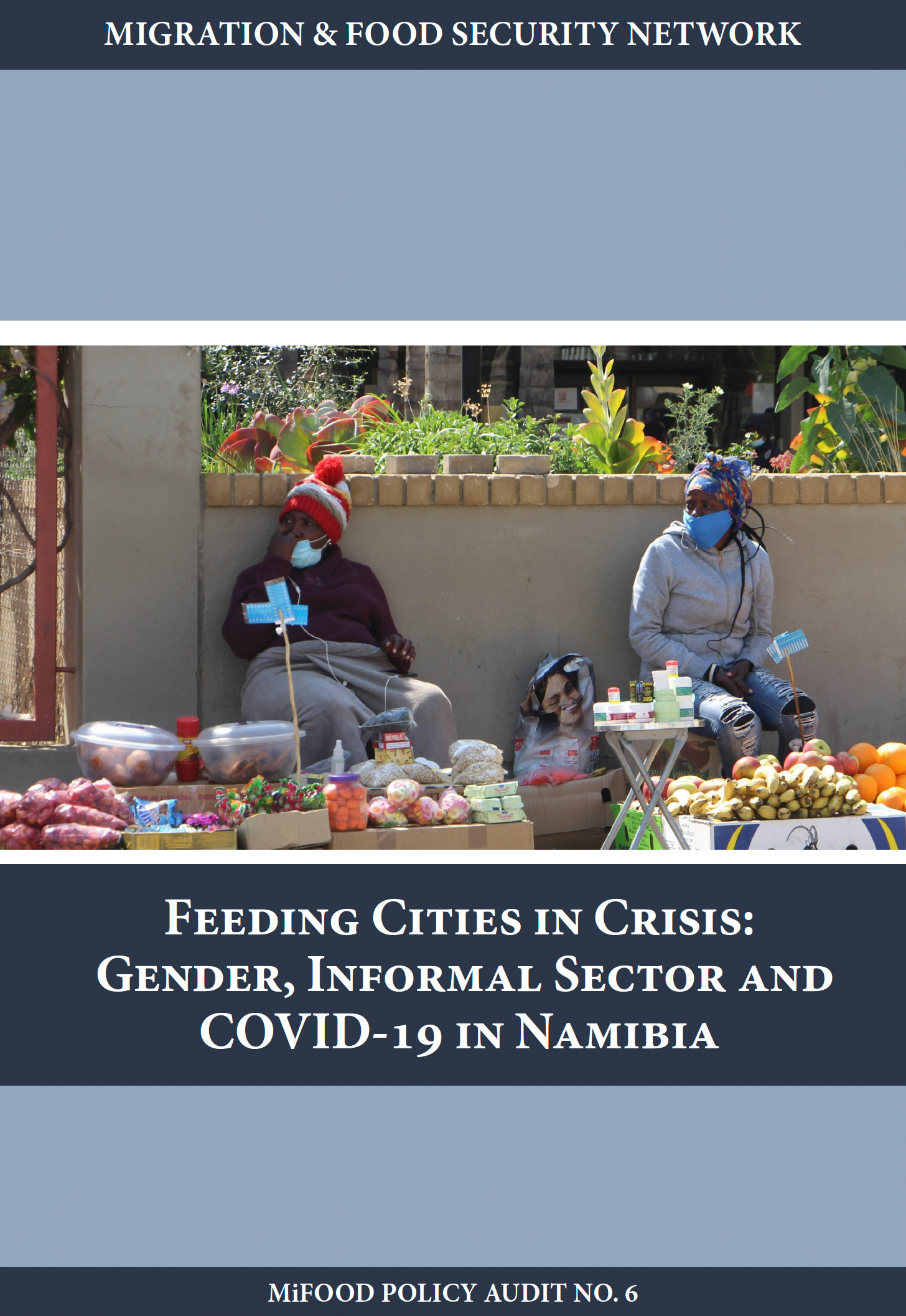
MiFOOD Policy Audit No. 6
Featured City: Windhoek, Namibia